2700K vs 3000K: The Two Warm Whites That Decide How a Room Feels
2700K and 3000K are the two most popular warm white color temperatures in residential, hospitality and commercial lighting. Both feel cozy and inviting, yet they create noticeably different moods: 2700K glows like a classic incandescent bulb, while 3000K reads warmer but cleaner and more modern. Because the two sit so close on the Kelvin scale, buyers often pick the wrong one for their project. This guide explains exactly what the numbers mean, shows you where each temperature shines, and gives you a simple room-by-room decision path so you can specify the right CCT the first time.
Whether you are a homeowner renovating a bedroom or an importer sourcing LED strips for a hotel, this is your complete 2700K vs 3000K buying guide.

- What Is Color Temperature (CCT)?
- 2700K Warm White: The Incandescent Glow
- 3000K Soft White: Warmer but Cleaner
- 2700K vs 3000K: Side-by-Side Comparison
- Which Is Brighter: 2700K or 3000K?
- Room-by-Room Guide: Where to Use Each
- 5 Factors Buyers Often Overlook
- Don’t Judge by Color Temperature Alone: CRI Matters
- Blue Light and Sleep: Why 2700K Is Preferred at Night
- Get Both: Dim to Warm and CCT Tunable Strips
- FAQ: 2700K and 3000K
- Recommended Warm White LED Strip Products
What Is Color Temperature (CCT)? A Quick Refresher
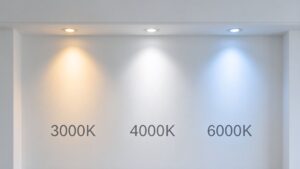
Color temperature, measured in Kelvin (K), describes the appearance of white light by the balance of its wavelengths. Warm light is rich in red and yellow wavelengths; cool light is rich in blue. Correlated Color Temperature (CCT) gives us a precise number for that balance. On the scale: 1800–2000K is a candle-like glow, 2700K is warm white, 3000K is soft white, 4000K is neutral white, and 5000–6000K is daylight or cool white.
Both 2700K and 3000K sit in the “warm white” range, which is why they are so easy to confuse. The practical takeaway: color temperature is not a measure of brightness — it only tells you the hue. The mood a space creates depends on the Kelvin you choose, so matching the temperature to the activity matters more than any single number.

2700K Warm White: The Incandescent Glow

2700K is the closest LED equivalent to a traditional incandescent bulb. Its filament reaches about 2700K at full brightness, so a 2700K LED produces that familiar, slightly yellow, honey-warm glow many people grew up with.
Because it lacks most blue wavelengths, 2700K signals relaxation: it supports melatonin production, helps you wind down, and is the best choice for spaces where you want to feel calm — bedrooms, living rooms, dining rooms and reading corners.
Trade-off: the warmest CCT reduces contrast, so 2700K is less ideal for task areas where you need to see fine detail.
3000K Soft White: Warmer but Cleaner
3000K is still warm white, but it is noticeably less yellow and cleaner than 2700K. It resembles a halogen lamp — warm enough to feel inviting, yet bright and crisp enough for daily tasks. This makes 3000K the most versatile warm option for modern interiors.
Where 2700K feels traditional and intimate, 3000K feels warm but fresh. It renders colors of food, skin and materials more accurately, which is why it is the default for kitchens, bathrooms, offices, hotel corridors and modern living spaces with light or white finishes.
If your project uses a lot of white walls, glass, tile or stainless steel, 3000K will look at home where 2700K can feel too amber.

2700K vs 3000K: Side-by-Side Comparison
Side by side the two are clearly different: 2700K is warmer and yellower, 3000K is softer and whiter. Here is the summary at a glance.
| Özellik | 2700K (Sıcak Beyaz) | 3000K (Soft White) |
|---|---|---|
| Light color | Warm, yellowish | Soft, cleaner white |
| Reference light | Incandescent bulb | Halogen bulb |
| Mood | Coziest, intimate, traditional | Warm but fresh, modern |
| Blue light | En düşük | Slightly higher |
| Task clarity | Lower contrast | Better contrast & color |
| Şunun için en iyisi: | Bedrooms, living rooms, dining, libraries | Kitchens, baths, offices, hotels, modern homes |
Which Is Brighter: 2700K or 3000K?
This is the most common misconception. Color temperature does not determine brightness. Parlaklık ölçülür lumens (lm), set by the LED chips, drive current and wattage (W/m) of the strip. A high-quality 2700K strip and a 3000K strip with the same chip density and power will produce almost identical lumen output.
3000K appears slightly brighter because the human eye perceives slightly bluer (shorter) wavelengths as more intense. So when you compare strips, always check the lumens and watts-per-meter in the datasheet — not the Kelvin number alone. If you need maximum perceived brightness and clarity in a warm look, choose 3000K; if you want the coziest possible glow, choose 2700K.
Room-by-Room Guide: Where to Use 2700K vs 3000K
Color temperature is about matching the light to the activity. Use this quick reference to spec the right CCT for each space.
Promotes relaxation and melatonin, ideal for sleep. 3000K if you also want to read comfortably.
Most welcoming and cozy for family and TV. 3000K suits modern, light-toned decor.
2700K for intimate meals; 3000K shows food colors more accurately in a modern setting.
Warmer than cool white but clean enough for countertops, chopping and cooking tasks.
Accurate color for grooming and makeup; neutral-clean feel with glass and tile.
Clean, welcoming and productive; the standard for hospitality corridors and lobbies.
2700K for a romantic, low-key mood; 3000K if the venue is brighter and more contemporary.

How to Choose: 5 Factors Buyers Often Overlook
- Ambience vs function. Decide whether the room is for relaxing or for tasks first — this alone picks 2700K or 3000K 90% of the time.
- Wall and finish colors. Warm wood and beige go beautifully with 2700K; white, glass and tile look cleaner under 3000K.
- Color rendering (CRI). A high CRI matters as much as the Kelvin — see the next section.
- Dimmability. Both temperatures dim well, but a dim-to-warm strip warms up as you lower it, which feels most natural.
- Budget. Fixed 2700K or 3000K is the most economical; a CCT-tunable strip is pricier but future-proof if you are unsure.
Don’t Judge by Color Temperature Alone: CRI Matters

Many people dislike a 2700K strip because it looks “dull” or “dirty” — but that is often a low CRI problem, not the color temperature. CRI (Color Rendering Index) measures how accurately a light renders colors. A low-CRI 2700K strip makes skin and wood look faded and grey; a CRI 90+ 2700K strip looks rich and natural.
The same applies to 3000K: raising CRI improves color accuracy far more than moving from 2700K to 3000K. When you source warm white LED strips, always confirm the CRI (aim for 90+, ideally 95+), especially for bathrooms, retail displays and hospitality.
Blue Light and Sleep: Why 2700K Is Preferred at Night
Blue light exposure in the evening can interfere with melatonin and make it harder to fall asleep. All else being equal, 3000K emits slightly more blue light than 2700K. For bedrooms and any space used late at night, 2700K is the safer, more sleep-friendly choice.
That said, the difference is small and both are firmly in the warm range. A typical smartphone screen sits around 6500K with far more blue content. So if you prefer the cleaner look of 3000K during the day, keep it in daytime zones and reserve 2700K for the bedroom — a balanced approach avoids the trade-off entirely.
Get Both: Dim to Warm and CCT Tunable Strips
If you cannot decide between 2700K and 3000K, modern LED strips remove the dilemma.


Dim-to-warm is the budget-friendly warm-only option; CCT tunable costs more but covers the full white spectrum. Use tunable strips in areas where you are unsure, and save cost with fixed CCT elsewhere. Read our 5000K vs 6000K guide for the cool-white side of the scale.
FAQ: 2700K and 3000K Warm White
Quick answers to the questions we hear most from customers choosing between 2700K and 3000K.
Is 2700K or 3000K better for a bedroom?
2700K is the better bedroom choice. Its lower blue content supports melatonin and helps you relax and fall asleep, while 3000K still works if you also want to read comfortably.
Is 3000K too bright for a bedroom?
3000K is not too bright — brightness is about lumens, not Kelvin. If a 3000K bedroom feels harsh, dim it or use 2700K; both stay comfortably in the warm range.
Is 3000K too yellow for a kitchen?
No. 3000K is clean enough for countertops and cooking while staying warmer and more inviting than cool white. Many kitchens use 3000K as the best balance.
Is 2700K or 3000K more modern?
3000K is the more modern choice — it looks cleaner on white walls, glass and tile. 2700K gives a more traditional, cozy feel.
Can I mix 2700K and 3000K in one room?
Yes. Use 2700K for accent and cozy zones and 3000K for task areas like countertops; keep them in separate zones so the difference reads as intentional.
Should a hotel use 2700K or 3000K?
Most hotels use 3000K in corridors and lobbies for a clean, welcoming look, and 2700K in guest rooms for warmth and sleep. Both have a place.
Does 2700K use less energy than 3000K?
No meaningful difference. Energy use depends on watts, not Kelvin. Compare wattage and lumens in the datasheet rather than the CCT.
What is the highest CRI I should look for?
Look for CRI 90+ for general warm white and 95+ where color accuracy matters most, such as bathrooms, retail and hospitality.
Conclusion: Pick the Warm White That Fits the Room
2700K and 3000K both deliver a cozy, inviting glow, but they serve different moods. Choose 2700K for bedrooms, living rooms and any space where you want maximum warmth and better sleep. Choose 3000K for kitchens, bathrooms, offices, hotels and modern interiors where you want warm light that still reads clean and crisp. When in doubt, a dim-to-warm or CCT-tunable strip lets you have both.
No matter which you pick, always confirm the CRI (90+) and compare lumens and W/m in the datasheet — those matter as much as the Kelvin number.
Recommended Warm White LED Strip Products
Factory-direct warm white LED strips from Lightstec. Click any product to view specifications and request a quote:


Size zaman kazandırmak için en yeni LED ışık ürünlerimizin tamamını içeren bir PDF kataloğu hazırladık. E-postanızı bırakın ve hemen alın.

Jerry is the director of Lightstec, a China LED strip light and LED aluminum profile manufacturer with 13+ years of export experience. He helps architects, contractors and importers specify the right lighting for their projects.
Daha Fazla Bilgi Edinin Hata Yapmadan Önce Daha Az İnsanın Size Söyleyeceği Profesyonel Liderlik Dersleri.