
Understanding LED terminology is the first step to choosing the right LED strip lights for your project. This glossary explains the most important terms — from brightness and color to chips and waterproofing — in plain English.
Fundamentals
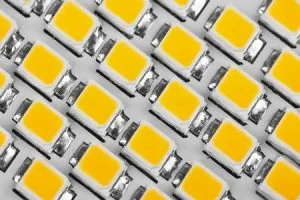
LED
A Light Emitting Diode (LED) is a solid-state semiconductor device that converts electrical energy directly into light.
Solid-State Lighting
Lighting devices with no moving parts — no filaments or gases that can break, rupture or leak, making them durable and safe.
Light & Color

Lumen (lm)
The measurement of brightness as perceived by the human eye. Today we use lumen instead of watts — the higher the number, the brighter the light.
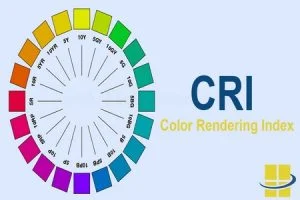
CRI
Color Rendering Index measures how colors look under a light source compared with sunlight. High CRI means colors are accurately represented.

CCT
Correlated Color Temperature defines the appearance of white light in degrees Kelvin — from warm candle-like light (below 3000K) to cool blue-tinted light (above 6500K).
TM-30
Fidelity Index measures how closely light renders colors like the sun using 99 samples; Gamut Index measures how saturated colors appear.
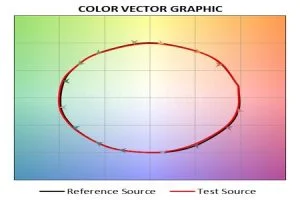
Color Vector Graphic
Measures which colors are saturated or desaturated and whether there is a hue shift in any of the 16 color bins.
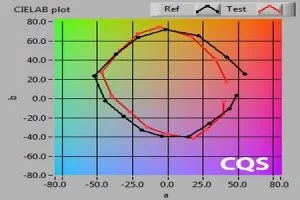
CQS
Color Quality Scale — an alternative to CRI using 15 highly-saturated colors to compare chromatic discrimination, human preference, and color rendering.
Luminous Efficacy
Lumen output divided by watts. Example: 300lm/ft at 3W/ft gives an efficiency of 100lm/W.
AC / DC Power
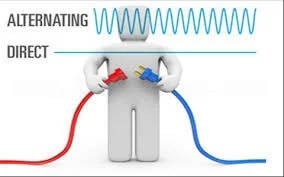
AC
Alternating Current — the electricity used in most homes and commercial spaces (line voltage). US line voltage is typically 90V–220V; Europe often averages higher.
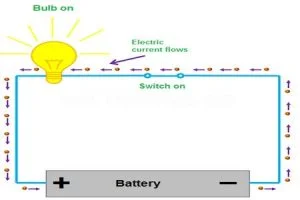
DC
Direct Current — most LED strips use low-voltage DC. A transformer or battery steps down AC to a suitable level, normally 12V or 24V DC.
Chips, Pitch & Binning

LED Pitch
The distance between individual chips on a strip. The shorter the pitch, the more uniform the light and the less spotting.

Chip Size
Chip names like 3528, 3014 and 5050 give the size in millimeters (e.g. 3528 = 3.5mm × 2.8mm). Different chips have different brightness and uses.
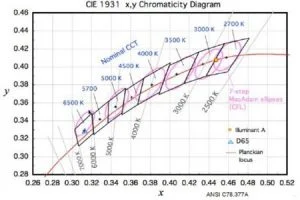
LED Binning
The process of grouping LEDs during production so they match the same color sector — ensuring consistent light and color output.
IP Ratings (Waterproofing)
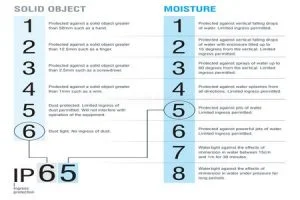
IP Rating
Ingress Protection — rates protection against solid objects (dust, sand) and liquids.
IP65
Water resistant. Protected against water jets from any angle. Do NOT submerge — not waterproof.
IP67
Water resistant plus. Protected against temporary submersion (10 minutes). Not for extended submersion.
IP68
Waterproof. Protected against permanent submersion up to 3 meters.
Commendatur DUXERIT velit Products
Qualis officinas Lightstec denudat;
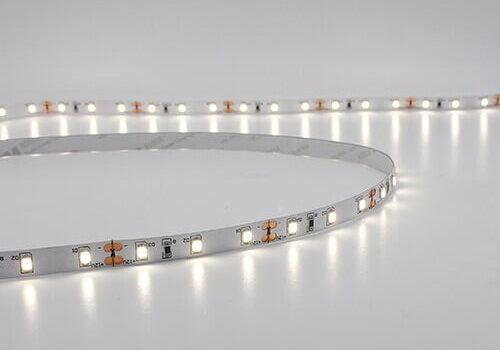
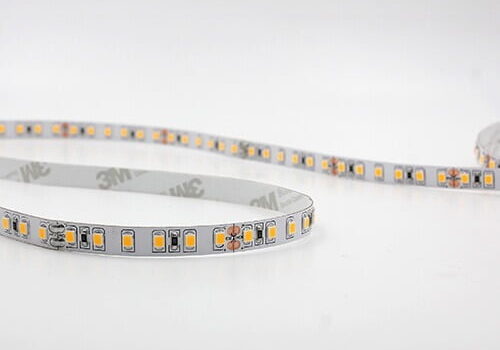

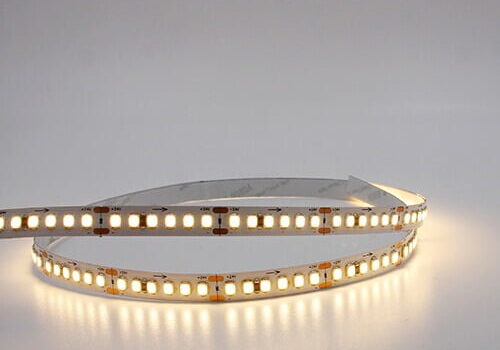
Still Choosing Your LED Strips?
Now that you understand the terms, contact Lightstec for the right strip — brightness, CCT, CRI and IP rating tailored to your project.

JerryHu
Conditor Lightstec. Ipsum gradum. 13+ ANNORUM IN DUCIT LUMINEM. Scientiam communicans et solutiones ad DUXERIT illustrandam.
Disce Magis Professio led Classes Quod Minus Populi Dic tibi Ante Erras.
professional led blog. Keep going
Hi Will, Thanks !