
Understanding LED terminology is the first step to choosing the right LED strip lights for your project. This glossary explains the most important terms — from brightness and color to chips and waterproofing — in plain English.
Fundamentals
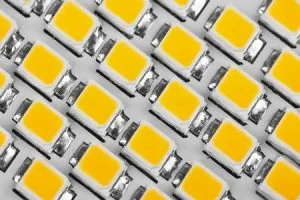
LED
A Light Emitting Diode (LED) is a solid-state semiconductor device that converts electrical energy directly into light.
Solid-State Lighting
Lighting devices with no moving parts — no filaments or gases that can break, rupture or leak, making them durable and safe.
Light & Color

Lumen (lm)
The measurement of brightness as perceived by the human eye. Today we use lumen instead of watts — the higher the number, the brighter the light.
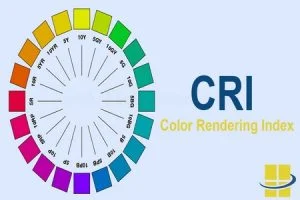
IRC
Color Rendering Index measures how colors look under a light source compared with sunlight. High CRI means colors are accurately represented.

CCT
Correlated Color Temperature defines the appearance of white light in degrees Kelvin — from warm candle-like light (below 3000K) to cool blue-tinted light (above 6500K).
TM-30
Fidelity Index measures how closely light renders colors like the sun using 99 samples; Gamut Index measures how saturated colors appear.
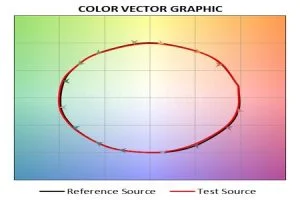
Color Vector Graphic
Measures which colors are saturated or desaturated and whether there is a hue shift in any of the 16 color bins.
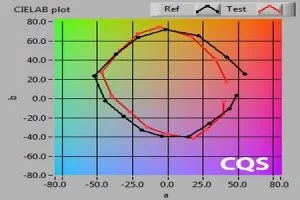
CQS
Color Quality Scale — an alternative to CRI using 15 highly-saturated colors to compare chromatic discrimination, human preference, and color rendering.
Luminous Efficacy
Lumen output divided by watts. Example: 300lm/ft at 3W/ft gives an efficiency of 100lm/W.
AC / DC Power
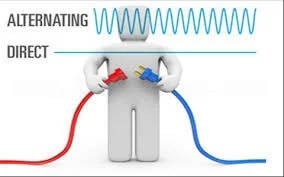
AC
Alternating Current — the electricity used in most homes and commercial spaces (line voltage). US line voltage is typically 90V–220V; Europe often averages higher.
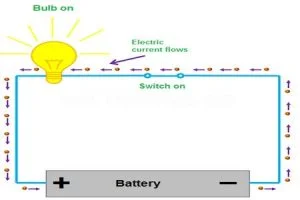
DC
Direct Current — most LED strips use low-voltage DC. A transformer or battery steps down AC to a suitable level, normally 12V or 24V DC.
Chips, Pitch & Binning

LED Pitch
The distance between individual chips on a strip. The shorter the pitch, the more uniform the light and the less spotting.

Chip Size
Chip names like 3528, 3014 and 5050 give the size in millimeters (e.g. 3528 = 3.5mm × 2.8mm). Different chips have different brightness and uses.
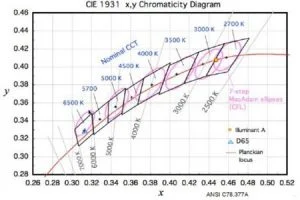
LED Binning
The process of grouping LEDs during production so they match the same color sector — ensuring consistent light and color output.
IP Ratings (Waterproofing)
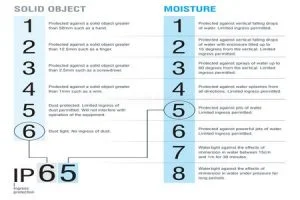
Classificação IP
Ingress Protection — rates protection against solid objects (dust, sand) and liquids.
IP65
Water resistant. Protected against water jets from any angle. Do NOT submerge — not waterproof.
IP67
Water resistant plus. Protected against temporary submersion (10 minutes). Not for extended submersion.
IP68
Waterproof. Protected against permanent submersion up to 3 meters.
Produtos recomendados para tiras de LED
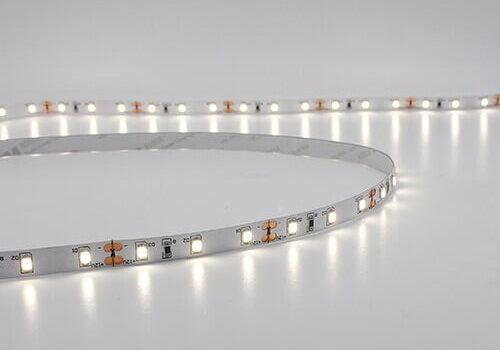
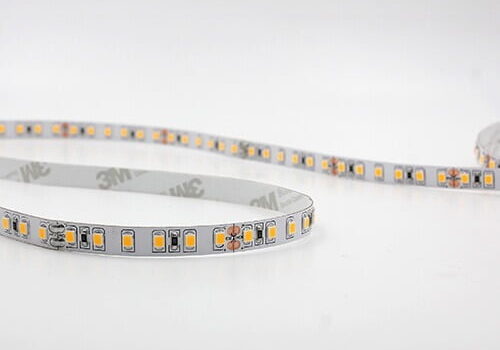
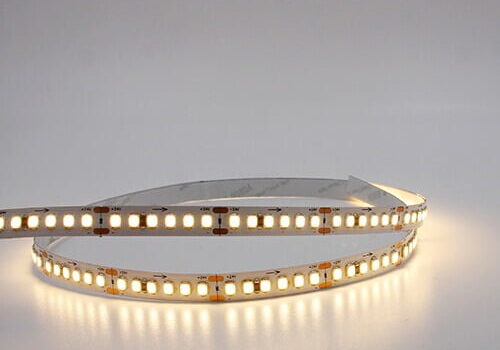
Tiras de qualidade de fábrica da Lightstec:

Still Choosing Your LED Strips?
Now that you understand the terms, contact Lightstec for the right strip — brightness, CCT, CRI and IP rating tailored to your project.

JerryHu
Fundador da Lighttec. Graduação em engenharia. Mais de 13 anos em iluminação LED. Compartilhando conhecimento e soluções para iluminação LED.
Aprenda mais aulas ministradas por profissionais que menos pessoas lhe dirão antes de você cometer um erro.
professional led blog. Keep going
Hi Will, Thanks !