Choosing between 5000K and 6000K LED lighting is one of the most common questions we hear from architects, contractors, and importers. Both are marketed as “cool white” or “daylight,” so at first glance they look nearly identical. But 5000K and 6000K create very different atmospheres, and they suit completely different applications.
This guide explains what color temperature (CCT) actually means, how 5000K and 6000K compare across brightness, color rendering, eye comfort and blue light, which one to choose for garages, offices, kitchens, and outdoor security lighting, and the practical specs you should check with your LED strip supplier before ordering. By the end you will know exactly how to spec the right color temperature for your project.
- What Is Color Temperature (CCT)?
- 5000K LED Light Explained
- 6000K LED Light Explained
- 5000K vs 6000K: Key Differences
- Which Is Brighter: 5000K or 6000K?
- Color Temperature vs CRI
- Best Color Temperature for Every Space
- Eye Comfort, Blue Light & Sleep
- A Better Option: Tunable White LED Strips
- Recommended Color Temperature LED Products
- Câu hỏi thường gặp
What Is Color Temperature (CCT)?
Color temperature is a number, measured in Kelvin (K), that describes the color appearance of a light source. The exact value—like 5000K or 6000K—is the Correlated Color Temperature (CCT). In everyday terms, the lower the Kelvin value, the warmer and yellower the light; the higher the value, the cooler and bluer it becomes.
Here is how the color temperature scale is usually described in the industry:
| CCT | Color Appearance | Sử dụng điển hình |
|---|---|---|
| 2700K–3000K | Warm white / soft white (yellowish) | Bedrooms, living rooms, hotels, restaurants |
| 3500K–4000K | Neutral white (slightly cool) | Offices, kitchens, bathrooms, retail |
| 5000K–6000K | Cool white / daylight (blue-white) | Garages, warehouses, hospitals, security |
| 6500K+ | Overcast cool daylight (strong blue tint) | Specialized inspection, laboratories |
Color temperature is independent of brightness: a 5000K strip and a 6000K strip can deliver the same lumen output. The Kelvin number only tells you about the tint of the light, not how strong it is. Keep that in mind as we compare the two.

5000K LED Light Explained
5000K is a balanced, neutral white light that closely resembles horizontal daylight—the light you see at midday when the sun is higher in the sky. It is clean and bright without a strong blue cast, which makes colors look natural and accurate while keeping the space feeling fresh and calm.
Because 5000K is the most “true white” of the cool temperatures, it is extremely versatile. It works in home offices where you want alertness without eye strain, in kitchens and bathrooms where accurate color matters, and in retail environments where products need to look true to life. 5000K is also a favorite for general outdoor and driveway lighting where a crisp, natural daylight effect is desired.
Tốt nhất cho: home offices, kitchens, bathrooms, retail displays, driveways, and any space where you want a bright, natural, comfortable white.

6000K LED Light Explained
6000K is a cooler white with a noticeable blue tint, similar to vertical daylight or a bright overcast sky. It looks crisper and more intense, which is why it is associated with clarity, focus, and high-contrast visibility. Where 5000K feels balanced and inviting, 6000K feels sharper and more clinical.
6000K is the go-to choice for garages, workshops, factories, hospitals, and warehouses—places where precision and visibility matter more than atmosphere. It is also widely used for outdoor security lighting, parking lots, and even automotive headlights, where its crisp, cool-white beam improves contrast and reveals detail at night.
Tốt nhất cho: garages, workshops, warehouses, factories, hospitals, security lighting, parking lots, and task areas requiring high focus.

5000K vs 6000K: Key Differences at a Glance
Although 5000K and 6000K look similar side by side, the differences become clear once you compare them on light color, brightness, mood, and best use:
| Tính năng | 5000K | 6000K |
|---|---|---|
| Light Color | Neutral, pure white | Cool white with blue tint |
| Reference | Horizontal daylight | Vertical daylight |
| Visual Tone | Balanced, clean, inviting | Crisp, intense, slightly clinical |
| Độ sáng | Bright but softer | Brighter, higher contrast |
| Eye Comfort | Easier on eyes for long tasks | Can strain eyes over time |
| Best Used For | Offices, kitchens, retail, living areas | Garages, hospitals, warehouses, security |
Which Is Brighter: 5000K or 6000K?
This is the most common misconception in LED buying. Color temperature does not determine brightness. Độ sáng được đo bằng lumens (lm), and lumen output is set by the LED chips, their drive current, and the power (W/m of the strip). A high-quality 5000K strip and a 6000K strip with the same chip density and wattage will produce very similar lumen output.
The reason 6000K appears brighter is that the human eye perceives shorter (bluer) wavelengths as more intense. So 6000K feels visually brighter and sharper even when its actual lumen output is the same as 5000K. When you compare strips, always compare the lumens and watts-per-meter in the datasheet, not the Kelvin number alone.

Color Temperature vs CRI: Two Things to Get Right
Color temperature tells you the tint of the light; the Color Rendering Index (CRI) tells you how accurately the light reveals the true colors of objects. The two are independent—a 3000K bulb can have CRI 90+, and a 6000K bulb can have CRI 80. For color-critical work (art, photography, cosmetics, retail clothing), always look for a high CRI (Ra ≥ 90) regardless of color temperature.
In practice, premium LED strips from a reliable manufacturer typically offer CRI 85–95 in the 5000K and 6000K range. High-CRI cool white lighting is especially valuable when displaying artwork, jewelry, or merchandise, because it makes textures and details pop while keeping colors accurate. If accurate color matters for your project, confirm the CRI (and ideally the R9 red-rendering value) in the product datasheet before ordering.

Best Color Temperature for Every Space
Here is a quick decision guide based on how the space will be used. When in doubt, ask: does this room need to feel comfortable, or does it need maximum visibility?
| Space | CCT được đề xuất | Tại sao |
|---|---|---|
| Home office / study | 5000K | Alertness without eye strain |
| Kitchen / bathroom | 4000K–5000K | Natural, accurate food and skin tones |
| Garage / workshop | 6000K | High contrast for detail work |
| Warehouse / factory | 6000K | Productivity and visibility |
| Retail / showroom | 5000K–6000K | Bright, eye-catching product displays |
| Outdoor / security | 6000K | Crisp detail and intruder detection |
| Driveway / landscape | 5000K | Natural daylight effect |
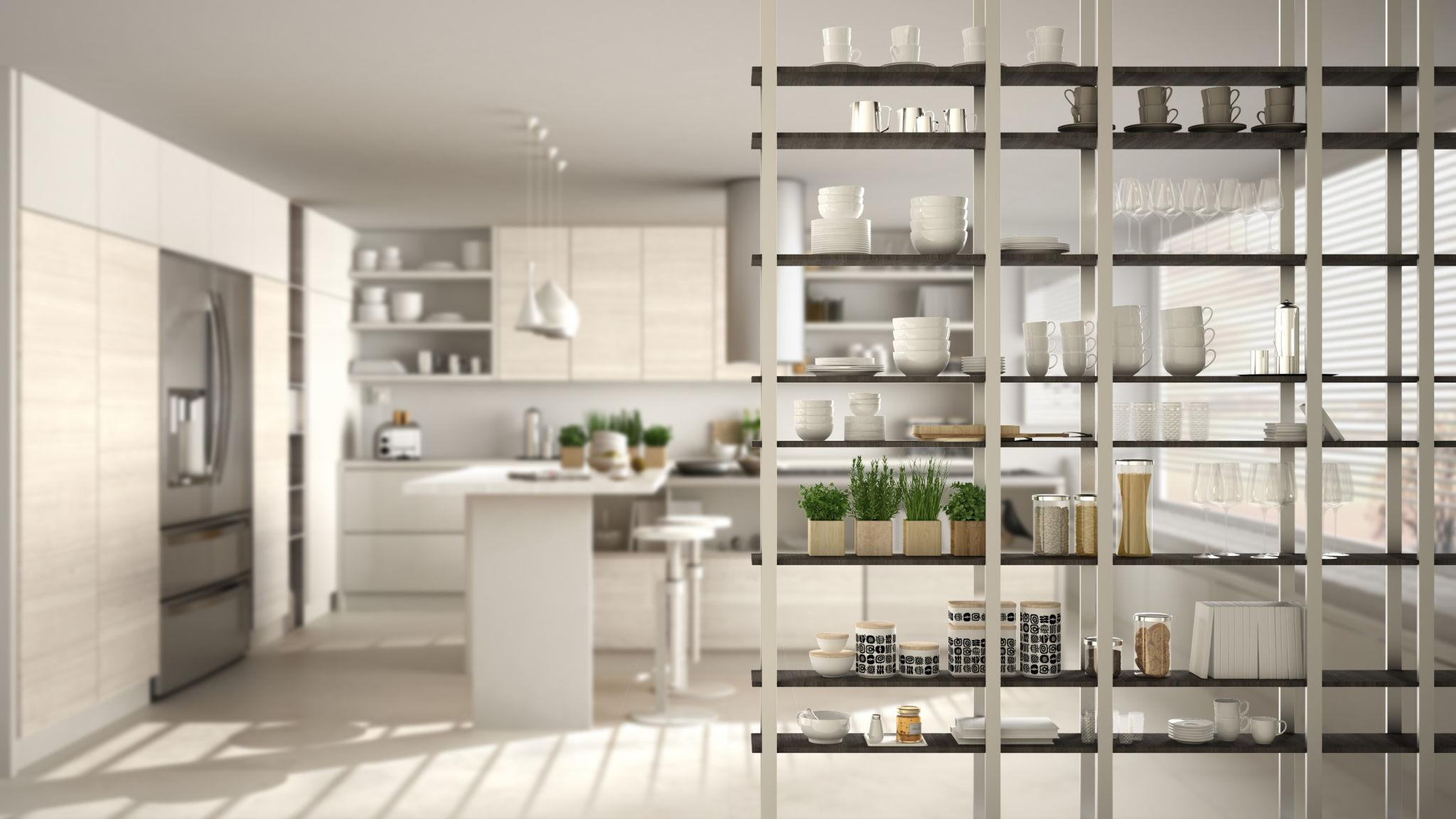 Kitchen (5000K) |  Outdoor (5000K–6000K) |
Eye Comfort, Blue Light & Sleep
Both 5000K and 6000K are cool temperatures with a higher blue-light component than warm white, which is why neither is recommended for bedrooms or other rest-focused spaces. The key difference is how much blue: 6000K carries noticeably more blue light than 5000K, so it feels harsher and can cause more eye strain during long exposure.
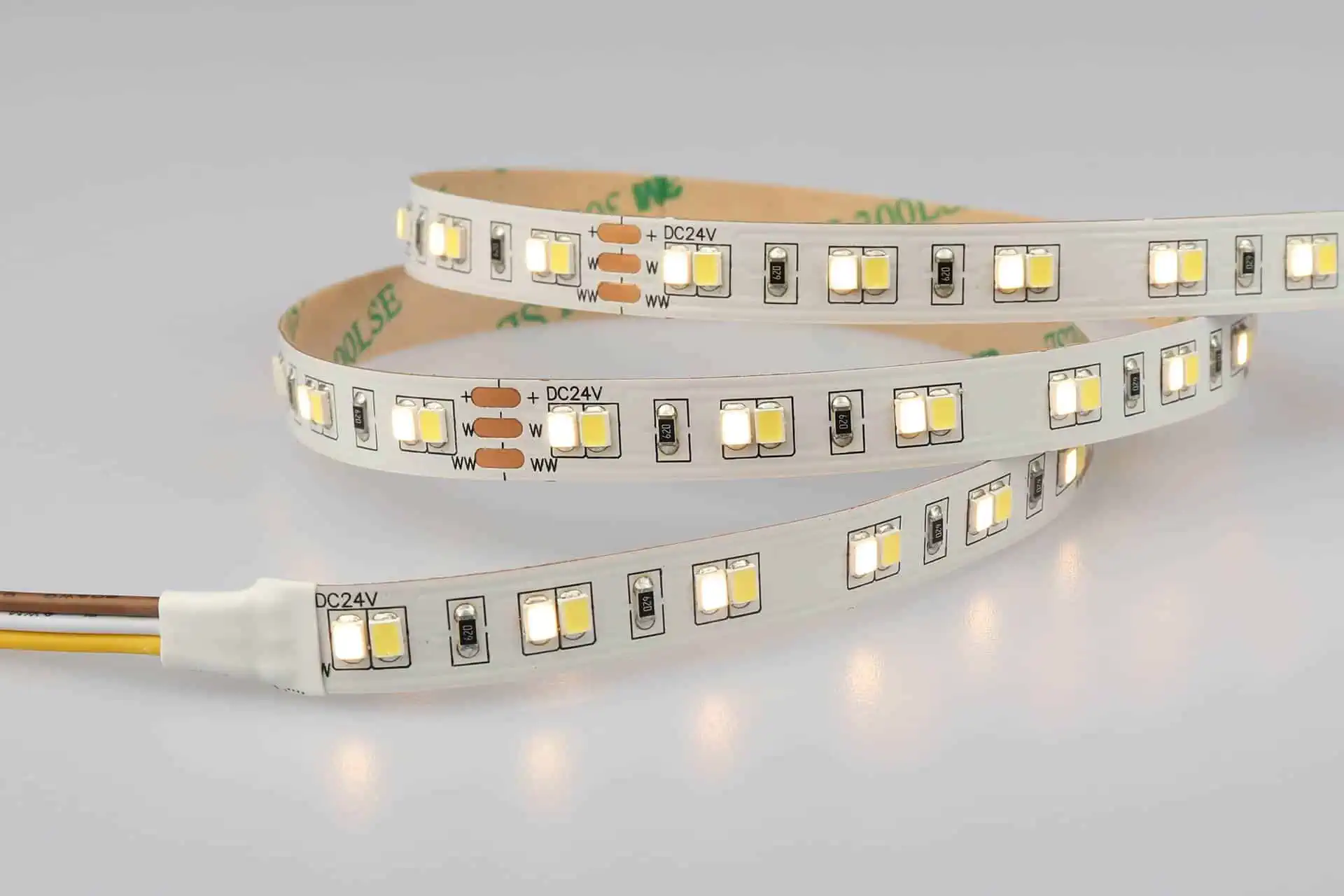
For tasks lasting several hours—reading, detailed work, or a full workday in an office—most people find 5000K more comfortable because it offers alertness with a lower blue peak. In spaces used late in the evening, excessive blue-rich cool light can suppress melatonin and delay sleep, so many designers switch to a warmer, dimmable setting after sunset. If your project needs the flexibility to be bright and cool during the day but warm and relaxing at night, a tunable white LED strip is the practical answer.
A Better Option: Tunable White LED Strips
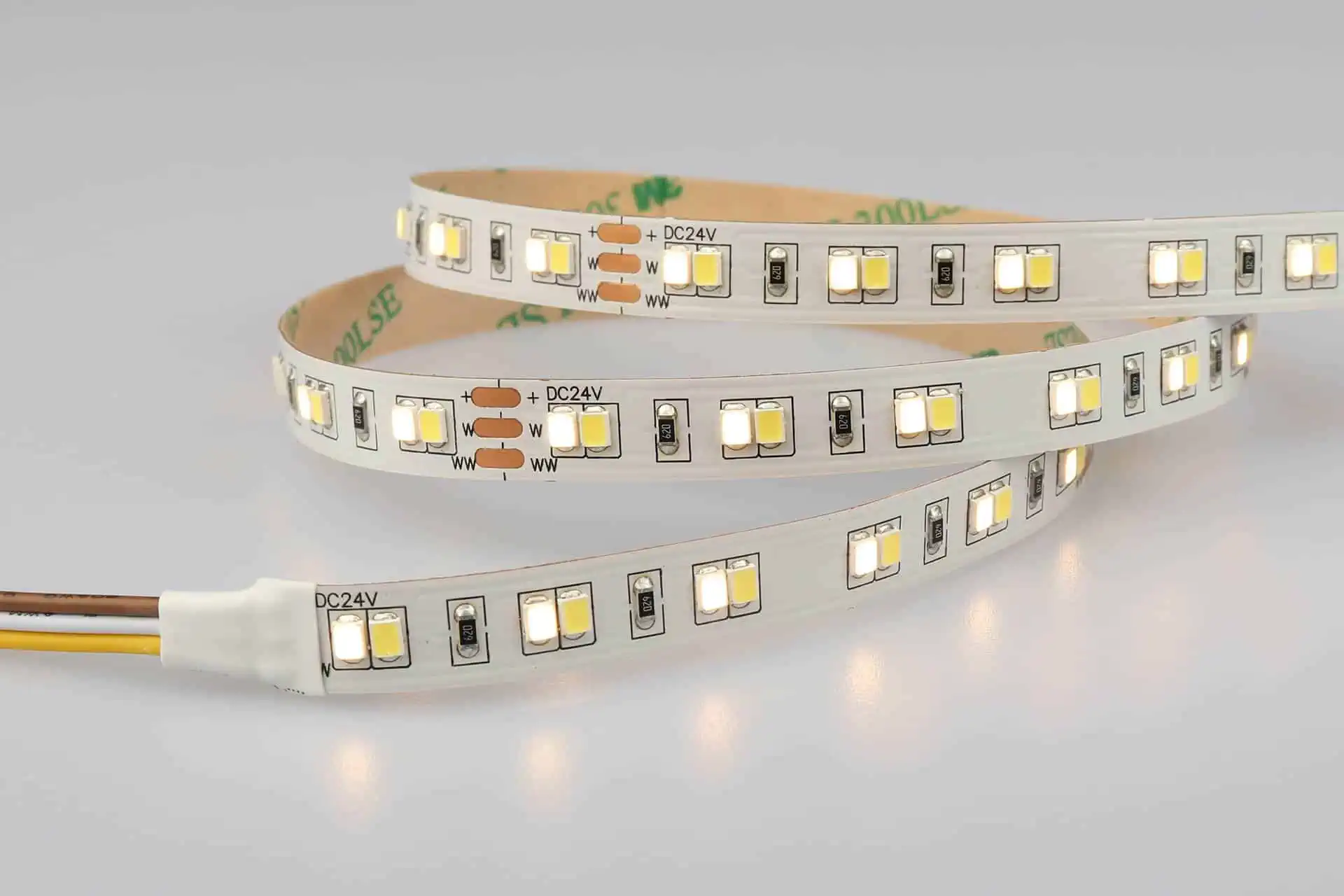
If you cannot decide between 5000K and 6000K—or if different areas of the same project need different moods—a tunable white (CCT-adjustable) LED strip is worth considering. These strips combine warm and cool white chips in one reel and let you dial the color temperature anywhere between roughly 2700K and 6500K using a controller, wall switch, or smart system.
Tunable white strips are increasingly popular for hotels, offices, and smart homes because they deliver the flexibility of both temperatures from a single product. For importers, offering a tunable white option alongside fixed 5000K and 6000K SKUs is a smart way to satisfy more customers. Ask your LED strip supplier about tunable white availability, CCT range, and the compatible controllers when planning your range. Our factory also supports custom CCT and CRI specifications for OEM orders.
Recommended Color Temperature LED Products
At Lightstec we manufacture a full range of fixed and tunable color temperature LED strips. Click any product to view specifications and request a quote:
 High-efficiency 2835 chips, 5000K / 6000K options, CRI 90+. |
 High-brightness 5050, multiple white CCTs, CE & RoHS certified. |
|
Cool 6000K daylight, ideal for garages and security lighting. |
 2700K–6500K adjustable, smart-controller ready. |
 Bright 5050 tunable white, dimmable & high CRI. |
 Dotless COB line light, seamless tunable white. |
Câu hỏi thường gặp
Q: Is 6000K brighter than 5000K?
Not necessarily. Brightness is measured in lumens, which depends on the LED chips and wattage, not the Kelvin value. 6000K looks brighter because the bluer light is perceived as more intense, but a 5000K strip with the same lumen output is just as bright in real terms.
Q: Which color temperature is best for a garage?
6000K is the usual choice for garages and workshops. Its crisp, high-contrast cool white makes detail work safer and easier. 5000K also works if you prefer a slightly softer, more natural tone.
Q: Is 5000K or 6000K better for a home office?
Most people prefer 5000K for a home office. It boosts alertness and focus without the eye strain and harsh blue tint that 6000K can cause during long working hours.
Q: Can I use 5000K and 6000K outdoors?
Yes. 6000K is widely used for security and parking-lot lighting because its crispness improves detail and camera detection. 5000K gives a more natural daylight effect, ideal for driveways, gardens, and landscape lighting.
Q: Does color temperature affect eye health?
There is no evidence that cool white LEDs damage the retina at normal intensities. However, blue-rich cool light can cause more eye fatigue over time and may suppress melatonin before bedtime, which can delay sleep. Use warm or dimmable light in the evening.
Q: What is the difference between CCT and CRI?
CCT (Kelvin) describes the color tint of the light; CRI describes how accurately it reveals colors. They are independent. For accurate color, look for CRI ≥ 90 regardless of the color temperature.
Need Help Choosing the Right Color Temperature?
Our team can recommend the right CCT and CRI for your project, provide samples, and support OEM customization with low MOQ.
 | Hồ Jerry LED Lighting Engineer & Export Manager at Lightstec With 13+ years in LED strip and profile manufacturing, I help importers and projects choose the right lighting. Every Lightstec strip ships with full datasheets, CE/RoHS certification, a reliable warranty, and 24/7 technical support—so you can order with confidence from our 6063 anodized aluminum profiles and LED strips. |
Have more questions about 5000K vs 6000K or LED color temperature in general? Leave a comment below or liên hệ với chúng tôi — we reply to every inquiry within 24 hours.
Tìm hiểu thêm các lớp hướng dẫn chuyên nghiệp mà ít người nhắc nhở bạn trước khi bạn mắc lỗi.