Choosing between 4000K and 5000K is one of the most common questions buyers ask when selecting LED strips for a kitchen, office, garage or retail space. The two temperatures look similar at a glance, yet they create very different moods and perform differently for tasks. This guide compares 4000K vs 5000K in plain language, tells you which rooms suit each, and covers CRI, circadian rhythm, glare and tunable options so you can order with confidence.
4000K is a neutral white — slightly warm, yellowish and the most versatile temperature for homes and offices. 5000K is a daylight white — brighter, crisper and ideal for task-heavy spaces like kitchens, garages, workshops and showrooms.

- What Is Color Temperature?
- What Is 4000K?
- What Is 5000K?
- 4000K vs 5000K — Side by Side
- Does Color Temperature Affect Brightness?
- Room-by-Room Guide
- Factors Beyond Color Temperature
- Why CRI Matters More Than You Think
- Circadian Rhythm & Sleep
- Glare & Visual Comfort
- Dim-to-Warm & CCT Tunable
- FAQ
- Which Should You Choose?
What Is Color Temperature?
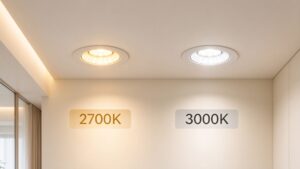
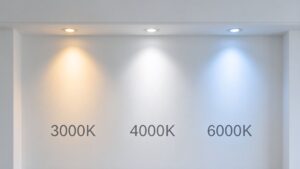
Color temperature measures the appearance of light — how warm (yellow) or cool (blue) it looks — and is expressed in Kelvin (K). Lower Kelvin values look warm and cozy; higher values look cool and clinical. 2700K is a warm candle-like glow, 3000K is soft white, 4000K is neutral white, 5000K is daylight white, and 6000K leans blue.

What Is 4000K?
4000K sits right in the middle of the scale — a neutral white with a faint warm tint. It looks clean and natural, similar to the soft daylight of early morning or late afternoon, with almost no visible blue. Because it balances comfort and clarity, 4000K is often called the most versatile color temperature: bright enough for work, warm enough to feel inviting.
- Soft, comfortable & eye-friendly for long use
- Restores object colors naturally
- Works in nearly every room
- Not quite as crisp for precision tasks
- May look slightly yellow to some
What Is 5000K?
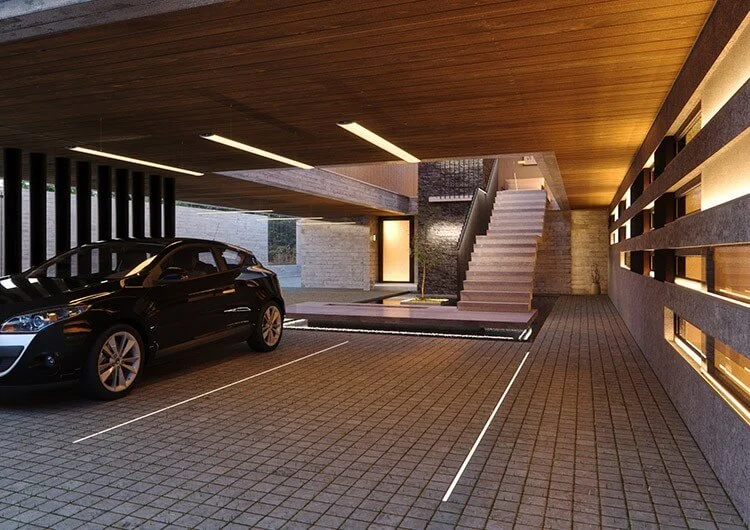
5000K is a daylight white — brighter, crisper and very close to midday natural light. It carries a subtle blue hint that reads as clean and professional, and it makes a space feel larger and more modern. 5000K is the go-to for task-heavy and commercial areas where focus, detail and contrast matter: kitchens, garages, workshops, hospitals, showrooms and stadiums.
- Improves focus & alertness
- Shows detail and texture clearly
- Makes spaces feel bright & spacious
- Feels cold and less cozy at night
- Long exposure may tire the eyes
4000K vs 5000K — Side by Side
| Item | 4000K (Neutral White) | 5000K (Daylight White) |
|---|---|---|
| Appearance | Warm, inviting, slightly yellow | Cool, crisp, bright white |
| Best for | Living rooms, bedrooms, offices, retail | Kitchens, garages, workshops, showrooms |
| Mood | Cozy, relaxing, balanced | Alert, focused, professional |
| Natural light | Early morning / late afternoon | Midday sun |
| Focus | Comfortable, less tiring | Highest alertness & detail |
| Evening | Relaxing, supports sleep | Suppresses melatonin, keeps you awake |
Does Color Temperature Affect Brightness?
No. Color temperature changes the tone of light, not how bright it is. Brightness is measured in lumens and depends on wattage and efficiency. A 4000K and a 5000K strip with the same LED count and driver produce essentially the same light output — the difference is only in how white or warm that light looks.
Room-by-Room Guide
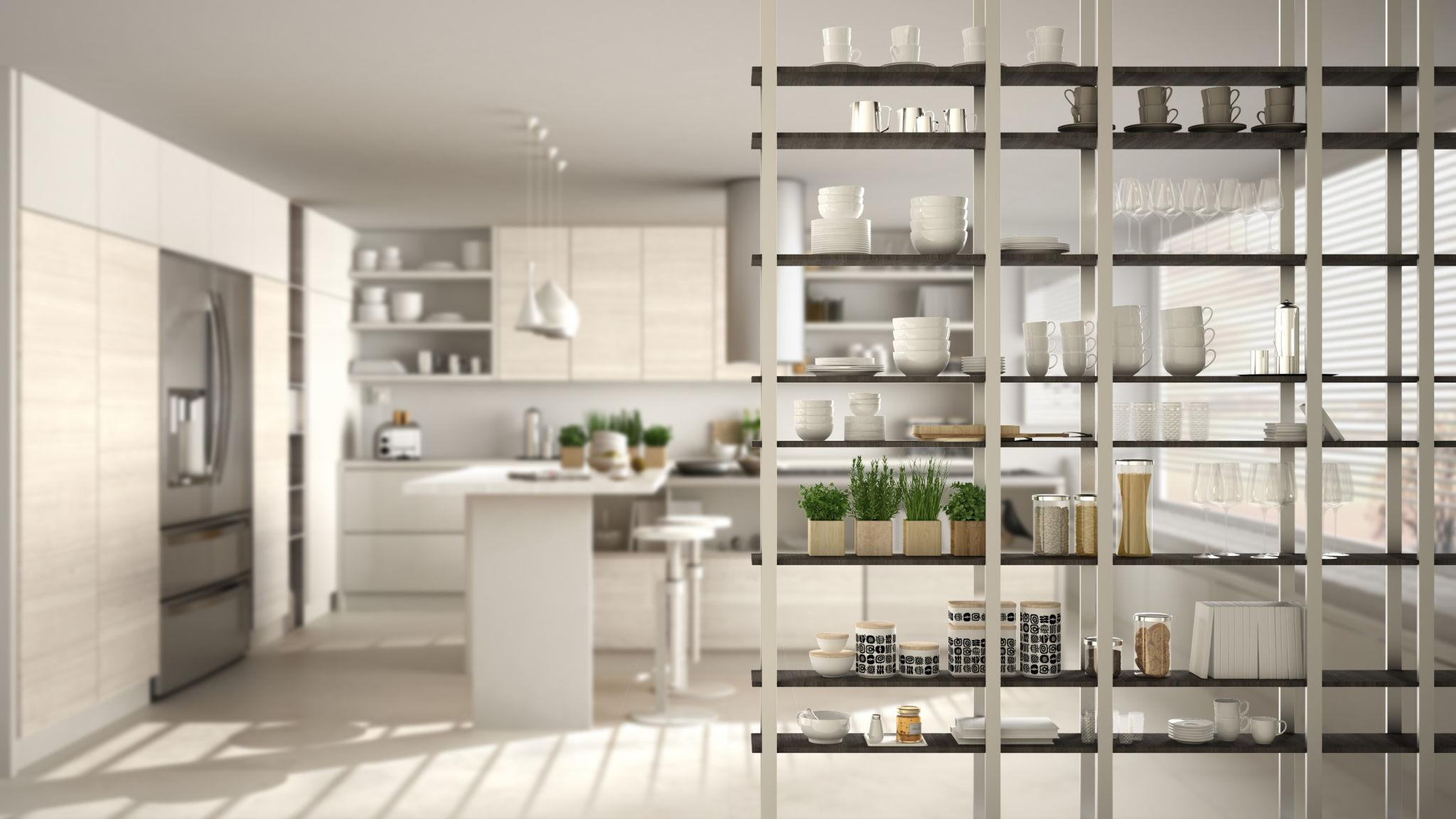
4000K for counters & islands (accurate food colors, no harshness); 5000K for heavy task kitchens.
4000K is the modern office standard — alert without eye strain. Use 5000K only for precise design work.
4000K keeps a cozy, inviting glow; prefer 2700–3000K if you want a warm sanctuary at night.
5000K for clear, task-focused lighting and safety.
4000K flatters skin & merchandise; 5000K makes fine details pop for galleries.
3000–4000K gives clean, even light without a clinical feel.
Factors Beyond Color Temperature
How accurately colors render. For painting, product display or makeup, choose CRI 90+.
Total light output. Match lumens to room size and the task, not just to color temperature.
Efficiency. Higher efficacy lowers your electric bill and heat output.
A good constant-current driver and dimmer extend life and let you fine-tune atmosphere.
Why CRI Matters More Than You Think
Two strips at the same 4000K can render color completely differently. CRI (Color Rendering Index) measures how accurately a light shows true colors under it. CRI 80 looks fine for most spaces; CRI 90+ is worth the upgrade for kitchens, retail, art, and any place where color accuracy matters. At Lightstec we test every strip for CRI so you can trust the color you design with.

Circadian Rhythm & Sleep
Cooler 5000K light suppresses melatonin, the hormone that makes you sleepy — which is why it keeps you alert at work but can disrupt rest if used in bedrooms late at night. 4000K is a gentler middle ground. For living and sleeping areas, many designers now use tunable or dim-to-warm strips so light warms up in the evening and you unwind naturally.
Glare & Visual Comfort
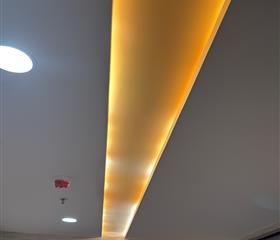
Both 4000K and 5000K can glare if not diffused. Because 5000K looks brighter and cooler, glare tends to be more noticeable. Mitigate it with the right aluminum profile, diffuser or shielding — this matters as much as the Kelvin value itself. Lightstec’s aluminum channels include milky diffusers that soften the line into a clean glow.
Dim-to-Warm & CCT Tunable — Get Both
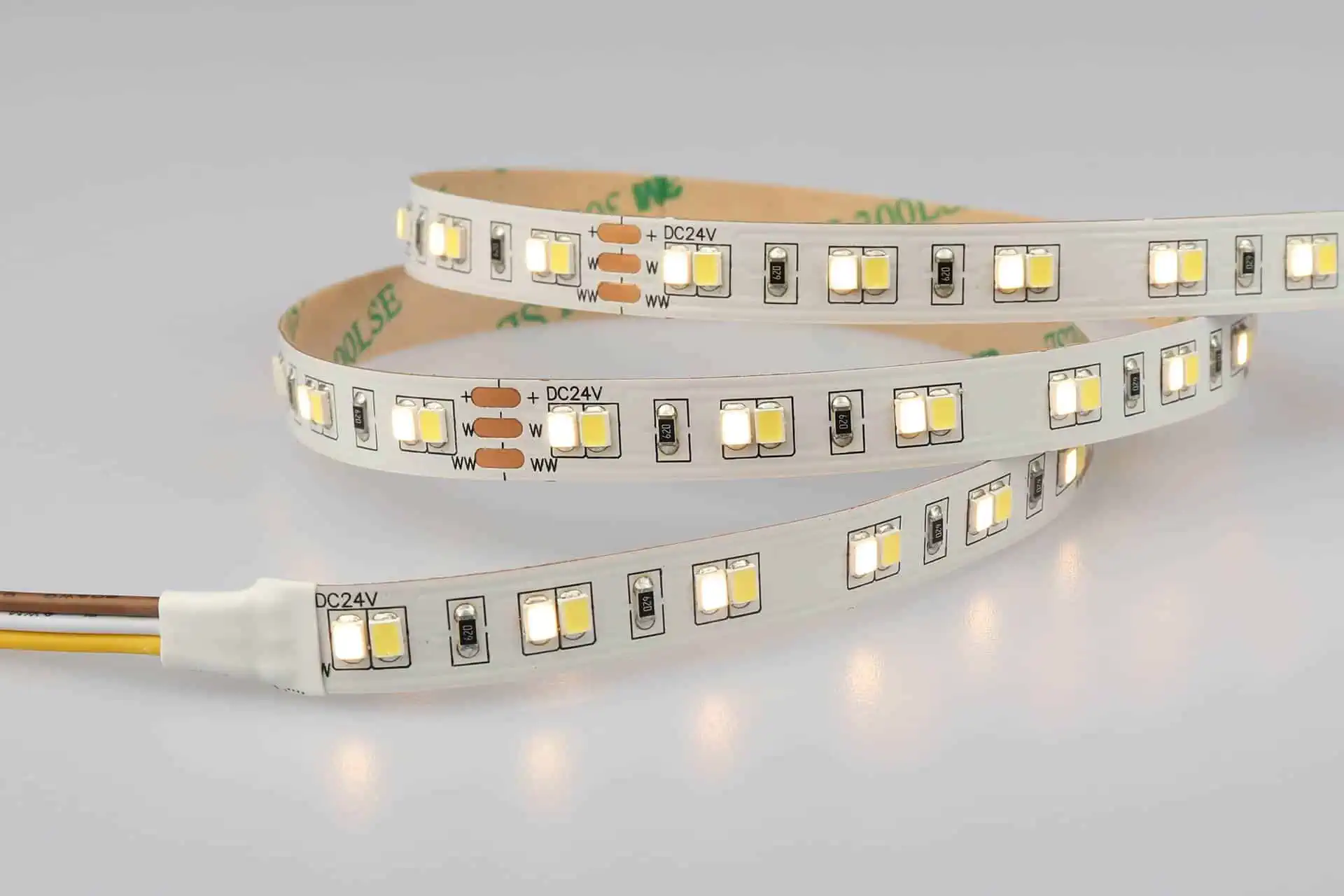

Don’t want to choose at all? A CCT tunable strip lets you set 4000K for day and 5000K for task work on the same reel. Learn more in our 5000K vs 6000K guide and the 2700K vs 3000K warm-white guide.
FAQ
4000K is neutral white with a warm tint — cozy and versatile. 5000K is daylight white — brighter, crisper and best for task-heavy areas. Same brightness, different tone.
For most offices, yes. 4000K keeps you alert without eye strain and looks professional. Use 5000K only for precision visual work like graphic design.
4000K over counters and islands renders food colors accurately and stays comfortable; 5000K suits a heavier task kitchen. Either works — it’s about how much contrast you want.
Lumens depend on wattage and efficiency, not the Kelvin value. A 4000K and 5000K strip of the same spec produce nearly identical light output.
Not inherently. Cool 5000K is fine for tasks, but prolonged exposure may tire eyes and suppress melatonin at night. Diffuse it well and warm it up after sunset for comfort.
Only if the zones serve different functions, e.g. 4000K ambient + 5000K task. For one-function rooms, use a single temperature to avoid a mismatched look.
5000K is ideal — it mimics daylight, boosts clarity and keeps the space feeling bright and safe for detail work.
For color accuracy, CRI matters more. Two 4000K strips can render color very differently, so choose CRI 90+ for kitchens, retail and art spaces.
Which Should You Choose?
If you want a space that feels inviting and balanced — living rooms, offices, retail — go with 4000K. If you need bright, crisp, task-focused light — kitchens, garages, workshops, showrooms — choose 5000K. And if your project mixes both moods, a CCT tunable strip gives you 4000K by day and 5000K (or warmer) whenever you need it.
Not Sure Which Color Temperature Fits Your Project?
Tell us your room, application and brightness needs — our engineers will recommend the right 4000K or 5000K LED strip and aluminum profile solution, with free samples.
Produtos recomendados para tiras de LED
Click any product to view specifications and request a quote:


Download Our Latest Catalog as a PDF
To save you time, we have prepared a PDF catalog with all our latest LED strip, neon and aluminum profile products. Leave your email and get it immediately.

General Manager & Lighting Engineer at Lightstec. 15+ years in LED strip manufacturing, helps clients worldwide pick the right color temperature and aluminum profile.
Aprenda mais aulas ministradas por profissionais que menos pessoas lhe dirão antes de você cometer um erro.