
Addressable LED strips offer unparalleled control over color, brightness, and effects. When choosing the right strip, the decision often comes down to two communication protocols: DMX512 En SPI. This guide compares both technologies to help you decide.
What is DMX512 Addressable LED Strip?
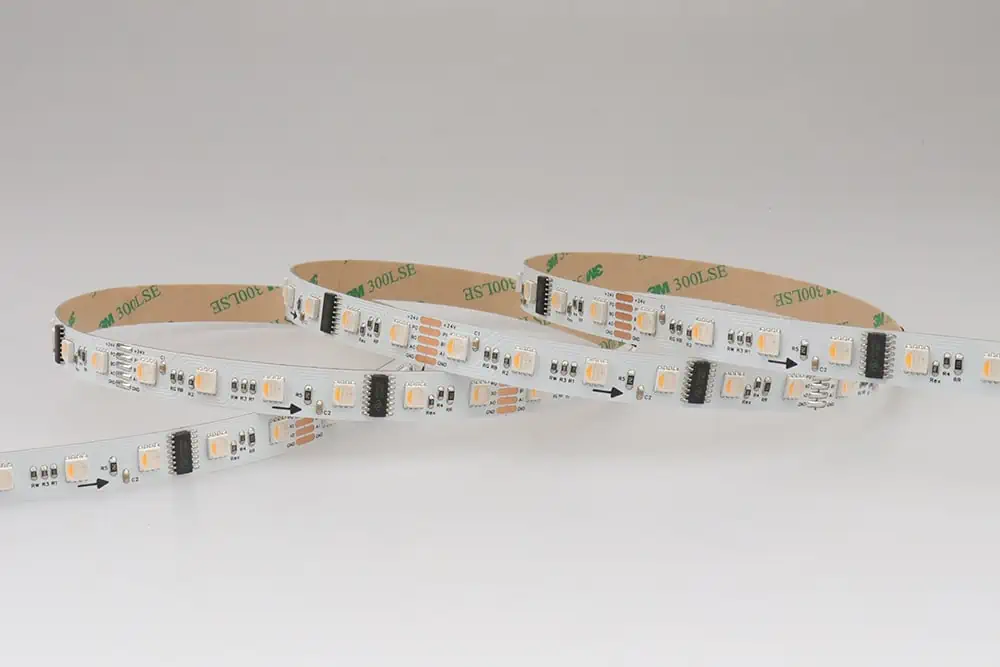
DMX512 strips use the DMX512 protocol — a globally recognized standard for controlling lighting in digital networks. Each segment contains a DMX512 IC that makes it addressable, allowing precise control of each LED’s brightness and color across the strip. Ideal for stage, architectural, and event lighting.
- Standardized protocol — globally recognized
- Long-distance transmission up to 300m
- Excellent scalability for large projects
- Reliable and professional-grade
- Complex setup — requires code & technical knowledge
- Lower LED density per meter
- Group-level control (not per-LED)
- Higher initial cost
What is SPI Addressable LED Strip?
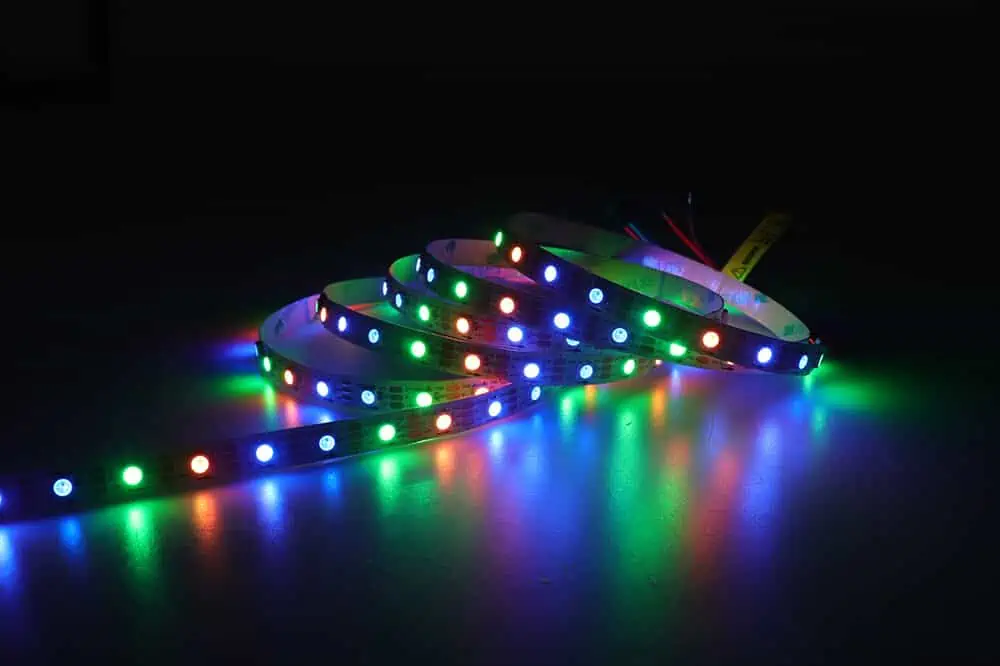
SPI stands for Serial Peripheral Interface — a synchronous communication protocol that controls individual LEDs. Each LED has its own IC; a microcontroller sends data (serial data line + clock line) with color and brightness for every LED, using PWM to adjust RGB channels. Can control over 1000 RGB pixels.
- Simple setup — only 2 wires (data + clock)
- Higher refresh rates, smooth color changes
- Per-LED control, 24-bit color (16.7M shades)
- Cost-effective for small projects
- Limited scalability — multiple controllers for large installs
- Non-standardized protocol
- Signal issues if an IC is damaged
DMX512 vs. SPI: Key Differences
| Criteria | DMX512 | SPI |
|---|---|---|
| Control Protocol | DMX512 (Digital Multiplex) | SPI (Serial Peripheral Interface) |
| Standardized | Ja | Nee |
| Addressing | Up to 512 channels/universe | Determined by controller & IC |
| Scalability | Large-scale projects | Small to medium projects |
| Code Writing | Required | Not required |
| LED-dichtheid | Lager | Hoger |
| Toepassingen | Stage, architectural, event | DIY, signage, retail |
| Cable Distance | Up to 300m | Optimal <1m |
| Cable Structure | 3 wires (DMX+, DMX−, GND) | 2 wires (Data, GND) |
| Data Speed | 250kHz | 400kHz – 2MHz |
| Controle | Group-level | Individual LED |
| Common Voltages | 5V, 12V, 24V | 5V, 12V |
| Kosten | High initial cost | Lower initial cost |
Applications of DMX512 and SPI Addressable LED Strips
Large arrays with precise color and brightness control.
Buildings and structures with dynamic effects.
Concerts, festivals — long-distance and reliable.
Custom lighting effects for hobbyists.
Eye-catching displays with precise color.
Per-LED control and dynamic effects.
Choosing the Right Addressable LED Strip for Your Project
Large-scale → DMX512 for long-distance & scalability; small/medium → SPI.
Per-LED precision → SPI; group-level → DMX512.
SPI is more cost-effective for budget-conscious projects.
Comfortable programming → DMX512 flexibility; otherwise SPI is easier.
Lightstec: Your Reliable LED Strip Supplier
- High-quality, long-lasting materials
- Professional grade for demanding environments
- Customization: IP, voltage, power, dimension, shape, length, packing
- User-friendly, easy setup
- Energy efficient — power only when needed
- Precise per-LED control for many effects
Decision Checklist
Determine scale; identify control needs; set budget; assess expertise.
Long-distance (>300m)? Standardized protocol? Multiple universes? Professional install?
Simple setup? High refresh rates? Per-LED control? Cost-effective?
Review DMX durability/IP; check SPI energy & color depth; explore customization; contact for advice.
Aanbevolen LED-stripproducten
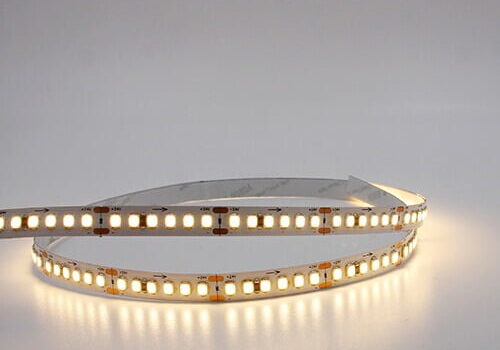
Fabriekskwaliteitstrips van Lightstec:

Conclusie
Whether DMX512 or SPI, Lightstec provides high-quality, reliable addressable strips with full customization. Contact us to bring your vision to life.

Download onze nieuwste catalogus als PDF
Om u tijd te besparen, hebben we een PDF-catalogus opgesteld met al onze nieuwste LED-lichtproducten. Laat uw e-mailadres achter en ontvang hem onmiddellijk.

Jerry Hu
Oprichter van Lightstec. Ingenieursdiploma. 13+ jaar in LED-verlichting. Het delen van kennis en oplossingen voor LED-verlichting.
Meer informatie Professionele lessen die minder mensen u vertellen voordat u een fout maakt.
Excellent technical comparison! We use both DMX512 and SPI in our stage lighting projects. Your explanation of when to use which protocol is practical and saves us from over-engineering simple installations.
In our theater and stage projects, DMX512 is always the right choice for reliability over long distances. SPI is great for short decorative runs where budget matters. This comparison covers the trade-offs perfectly.
Thanks for this detailed guide. We are preparing for the HKTDC Hong Kong International Lighting Fair (Autumn Edition) and would love to meet with overseas buyers. Our factory specializes in LED strips, linear lights, and aluminum profiles with CE/RoHS/FCC certifications.
Great technical content! Our architecture firm in Austria regularly recommends LED strip lighting. We have used Lightstec products on several projects.