
Black LED channels have become the go-to choice for designers who want strip lighting that disappears into dark, minimalist interiors. When the light is off, a black aluminum profile blends into dark walls, cabinetry, and ceilings as a thin decorative line. When it turns on, a crisp beam of light emerges from nowhere.
But not every black channel is the same. There are surface-mounted U-channels, corner V-profiles, recessed flush-mounts, suspended linear lights, up/down wall washers, floor channels, skirting profiles, stair nosings, and even closet rod lights. Choosing the wrong shape means the light won’t hit where you want it.
This guide walks through every type of black LED channel, when to use each one, and how to pick the right diffuser. At Lightstec, we manufacture black anodized LED aluminum profiles for residential and commercial projects worldwide.

What Is a Black LED Channel?
A black LED channel is an aluminum extrusion housing for LED strip lights, finished in matte black through either anodization or powder coating. Inside the channel sits the LED strip; a frosted, smoked, or clear diffuser cover snaps on top to hide individual LED dots and produce a smooth linear glow.
The channel serves three jobs at once: it protects the strip from dust and moisture, acts as a heat sink to extend LED life, and provides a clean, professional finish. A complete system includes the base extrusion, a diffuser cover, end caps, mounting clips, the LED strip itself, and a compatible LED driver.
Black anodized vs powder-coated: Anodized black creates a durable, scratch-resistant oxide layer that is part of the aluminum itself. Powder-coated black applies a baked-on paint layer, offering deeper color but slightly less wear resistance. Both work for indoor use; anodized is preferred for commercial and high-traffic environments.
Black vs Silver Aluminum Channel: Which Finish?
The default aluminum profile is silver (natural anodized). Black is an optional finish that changes both the look and the light quality. Here is how they compare:
| Faktors | Black Channel | Silver/Natural Channel |
|---|---|---|
| When off | Disappears into dark walls; reads as a thin black decorative line | Visible as a bright silver strip; stands out on dark surfaces |
| Best wall color | Dark gray, black, navy, charcoal, dark wood | White, light gray, beige, bright interiors |
| Light contrast | Higher contrast glow; light appears more dramatic | Softer, more blended light wash |
| Siltuma izkliedēšana | Same as silver (aluminum conducts heat equally) | Same |
| Cena | Slightly higher (extra anodizing step) | Standard, lower cost |
| Style | Modern, minimalist, home theater, retail, hospitality | Classic, residential, bright kitchens, offices |
If your room has light-colored walls and a bright, airy feel, silver profiles blend in naturally. If you are going for a dark, moody, or theatrical look, black channels are the better choice.
Black Diffuser Options: Smoked vs Milky vs Clear
The diffuser cover is as important as the channel body. It determines how much light escapes and what the fixture looks like when off.

Smoked (dark translucent) diffuser: This is the signature black look. When the light is off, the diffuser matches the black channel body for a seamless black line. When lit, light shines through with reduced brightness (about 30-50% light loss) but with high visual drama. Best for accent and ambient lighting, not task lighting.
Milky (opal white) diffuser: Maximum light output (80-90% transmission) and the best dot-hiding effect. The diffuser appears white or frosted even on a black channel, creating a two-tone look. Choose this when brightness matters more than invisibility.
Clear diffuser: Nearly 100% light transmission but individual LED dots are visible. Usually paired with a high-density strip (120+ LEDs/m) to minimize dot patterns. Rarely used on black channels since it reveals the strip inside.
Here is what black diffusers look like with different LED strip colors:

Warm white

Red

Blue
9 Types of Black LED Channels by Application
Black channels come in different shapes for different mounting positions. Here are the nine most common types and where each shines.
1. Surface-Mount U-Channel

The most versatile black channel. A U-shaped extrusion screws or clips directly onto any flat surface – under cabinets, shelves, display cases, or along a wall. Light shines straight down. Best for retrofits and DIY projects. Fits strips up to 12mm wide.
2. Corner V-Profile (45 Degree)

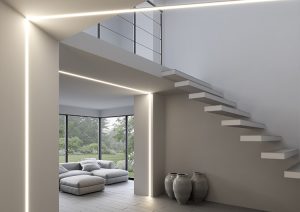
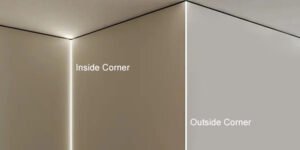
Designed for the junction of two perpendicular surfaces (wall-to-ceiling, wall-to-wall). The strip sits on a 45-degree angle, casting light diagonally across both surfaces. Perfect for wall-washing from corners and adding a dramatic edge glow to shelving units.
3. Recessed Flush-Mount Channel

Sits flush inside a routed groove in drywall, wood, or tile. The black flange covers the gap between the channel and the cutout. The cleanest, most invisible result – ideal for high-end residential and commercial interiors. Requires wall modification during renovation.
4. Square Narrow Channel

A slim square profile for tight spaces where a low-profile look matters. Light exits straight down through a narrow diffuser. Great for tight gaps between shelves, under cabinet lips, or along furniture edges.
5. Suspended Linear Channel

Hangs from the ceiling by steel cables or rods. A wide internal channel can hold multiple strips side by side for higher output. Used over kitchen islands, conference tables, reception desks, and retail display areas as a primary decorative light fixture.
6. Up/Down Wall Washer

Mounts flat against a wall and emits light from both top and bottom edges simultaneously. Two ultra-narrow strips (5mm) run on each side. Creates a dramatic vertical halo on feature walls, headboards, and TV backgrounds.
7. Narrow Micro Channel

The smallest black profile, designed for 5-8mm wide ultra-narrow strips. Perfect for tight gaps where a standard channel won’t fit – thin furniture edges, door frames, narrow display niches, or precision architectural details.
8. Skirting/Baseboard Channel

Replaces traditional baseboard at the floor line. Light reflects off the inner channel wall and bounces onto the floor, creating a floating-wall effect. See our detailed LED baseboard lighting guide for room-by-room ideas.
9. Stair Nosing Channel

Installs on the folded edge of a stair tread. A serrated top surface provides anti-slip grip while light washes down the riser below. Essential for nighttime stair safety in modern homes and commercial buildings.
Best Applications for Black LED Channels
Where does black really earn its keep? These are the design scenarios where a black channel outperforms silver:
Home theater & TV wall
Black channels disappear into dark media walls. The only visible element is the light itself – no silver hardware breaking the immersion.
Modern kitchen & cabinets
Under upper cabinets, a black channel blends into dark cabinetry. Task light shines on the countertop while the fixture itself stays invisible.
Retail & display shelving
Dark stores and boutique displays use black channels to keep focus on merchandise, not the lighting hardware.
Bedroom headboard glow
Up/down wall channels behind the bed create a soft reading-and-relaxation light without bedside lamps.
Office & conference rooms
Suspended black linear channels over tables provide task-level light while looking sleek against dark ceilings.
Bathroom vanities
IP65-rated black channels around mirrors or along the floor add spa-like ambiance. Always choose waterproof profiles for wet zones.
How to Choose the Right Black LED Channel
Before ordering, answer these five questions:
| Question | What to Check |
|---|---|
| Where will it mount? | Flat surface = U-channel; corner = V-profile; wall = up/down; floor = recessed floor channel |
| Strip width | Inner channel width must exceed strip width by 1-2mm. Common widths: 8mm, 10mm, 12mm |
| Diffuser style | Want invisible when off? Smoked diffuser. Need max brightness? Milky diffuser |
| Indoor or wet? | IP20 for dry rooms; IP65 ūdensizturīgs for bathrooms, showers, outdoor |
| Surface mount or recess? | Surface mount = DIY-friendly; recessed = plan during renovation |
Uzstādīšanas padomi
Black channels install the same way as silver ones, but a few details matter more with the black finish:
Plan corners first. At internal corners, cut the profile at 45 degrees on both ends for a tight miter. External corners use a V-profile or corner connector.
Hide mounting clips. Black channels use black or stainless steel clips. Space them every 40-60cm so the diffuser cover clips on securely without visible gaps.
Power injection. For runs over 5 meters, use 24V strip and inject power from both ends to avoid brightness drop at the far end.
Test before closing walls. Before installing the diffuser cover and any trim, power on the strip and check every section. Fixing a dead section after the wall is closed is painful.
Pair with dimming. Black channels are often used for ambient and mood lighting. A dimmable strip plus a compatible dimmer gives you full control. Read our guide to 8 dimming methods for LED strips.
Bieži uzdotie jautājumi
Does the black finish reduce light output?
The channel body itself does not reduce light – all light exits through the diffuser. A smoked (black) diffuser does reduce output by 30-50%, while a milky white diffuser on a black channel loses only 10-20%.
Can I use a black channel in a bathroom?
Yes, but only with an IP65-rated waterproof channel and silicone end caps. Standard IP20 black channels will fail from steam and humidity. See our waterproof profile guide.
Is black anodizing or powder coating better?
Black anodizing is harder, more scratch-resistant, and better for high-traffic commercial areas. Powder coating offers a deeper, more uniform matte black but may scratch more easily. For most residential projects, both work well.
Can I cut black channels to length?
Yes. Use a fine-tooth hacksaw or miter saw. After cutting, deburr the ends and install the matching end cap (with or without a wire hole).
Does a black channel look bad when the light is off?
That depends on your wall color. On dark gray, black, or charcoal walls, a black channel disappears as a thin decorative line. On white or light walls, it reads as a deliberate black trim detail – which is usually the intended design.
What strip width fits most black channels?
Most standard black channels fit 10-12mm wide strips. Narrow micro channels fit 5-8mm strips. Always check the inner width of the specific profile before ordering.
Final Thoughts
Black LED channels are the modern designer’s choice for strip lighting that looks intentional when off and dramatic when on. The key is matching the channel shape to your mounting position and choosing the right diffuser for your brightness needs.
Start with one feature wall, a TV backdrop, or under-cabinet lighting rather than the whole house. At Lightstec, we supply black anodized LED aluminum profiles in surface, corner, recessed, suspended, and skirting configurations, plus the strip lights and drivers to complete the system.
Need Black LED Aluminum Profiles?
Get factory-direct pricing, custom lengths, and engineering support from Lightstec.
Recommended Products for Black Channel Projects
Noklikšķiniet uz jebkura produkta, lai skatītu specifikācijas un pieprasītu cenu:

Black LED Aluminum Profiles
Full range of black anodized channels: surface, corner, recessed, suspended, and skirting types.
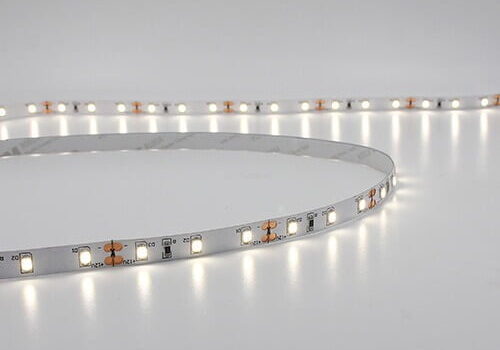
SMD2835 LED sloksnes gaisma
60 LEDs/m, warm white 3000K. Perfect ambient strip for black channel installations.
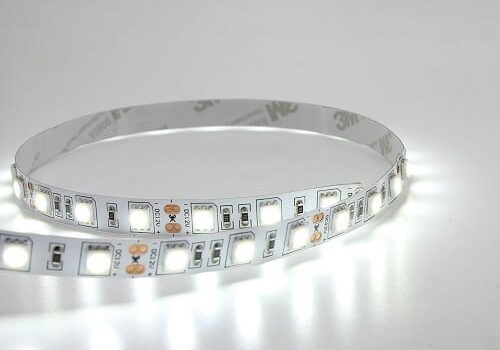
SMD5050 LED sloksnes gaisma
Brighter output for visible wall-wash effects through smoked or milky diffusers.


About Author: JerryHu
Jerry Hu is the founder of Lightstec, a leading LED strip light and aluminum profile manufacturer based in Zhongshan, China. With over 15 years in the LED lighting industry, he helps contractors, designers, and brand owners worldwide source reliable LED components and solve real lighting project challenges.
Uzziniet vairāk profesionālu vadītu nodarbību, par kurām mazāk cilvēku stāsta, pirms kļūdāties.
This is exactly what I was looking for! We’re building a home theater and wanted black channels that disappear into the dark walls. The explanation about smoked vs milky diffusers was the key piece I was missing – I ended up going with smoked diffusers since the light effect is the whole point, and brightness isn’t the priority for ambient cinema lighting.
Love the black vs silver comparison table. We’ve been specifying silver profiles for years for white-wall kitchens, but our recent projects have been leaning dark and moody. The up/down wall washer channel looks perfect for a headboard feature wall we’re designing. Do you ship samples internationally?
Question about the stair nosing channel – is it rated for commercial stairwells? We have a retail project coming up and need anti-slip tread lighting that meets code. Also, what’s the maximum run length on a single driver for the 24V strips you recommend?
The three-color comparison (white, red, blue through black diffuser) is really helpful. I was originally going to use a milky diffuser for maximum brightness, but now I think smoked will look much more sophisticated for the TV wall in our living room. Can the diffuser cover be replaced later if we change our minds?
Great breakdown of all 9 channel types. We typically install surface-mount and corner profiles for most residential jobs, but the suspended linear channel is becoming more popular for open-concept kitchen islands. Good to see a manufacturer finally organizing all these options in one clear guide.