
Soft white and daylight are the two most common LED light color temperatures, but they look completely different and suit completely different rooms. Soft white (2700K–3000K) gives a warm, cozy glow for bedrooms and living rooms, while daylight (5000K–6500K) delivers a bright, cool light for kitchens, offices and garages. This guide breaks down the difference on the Kelvin scale, room by room, so you can choose the right color temperature the first time.
Quick answer: choose soft white for relaxation and sleep, choose daylight for tasks and focus — and if you want both, a tunable white LED strip covers the full range.
What Is Color Temperature (Kelvin)?
Color temperature describes how warm or cool a light source looks, measured in Kelvin (K). The lower the number, the warmer and yellower the light; the higher the number, the cooler and bluer it appears. A standard 2700K bulb mimics the warm glow of traditional incandescent lamps, while a 6000K strip looks like bright noon daylight.
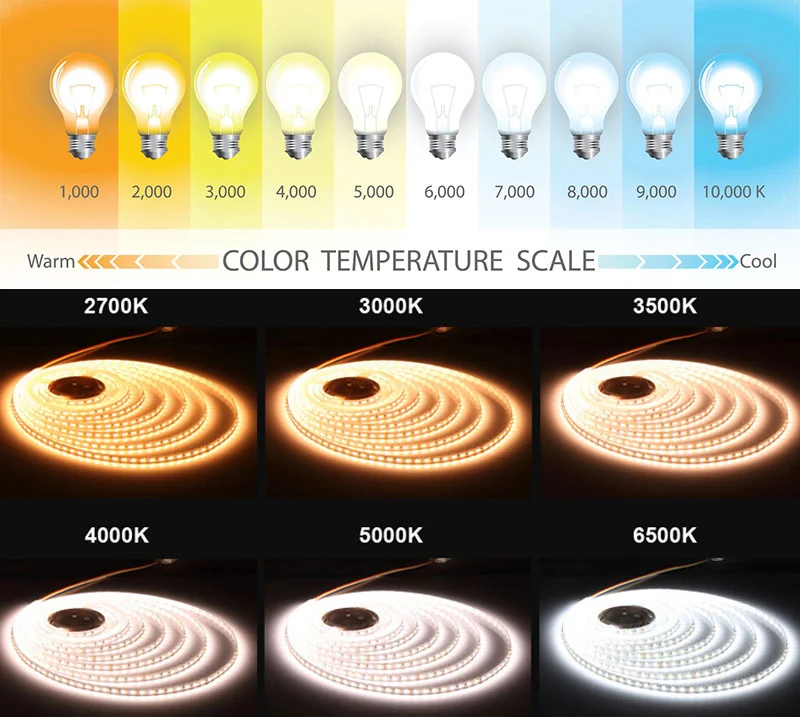
Soft White vs Daylight at a Glance
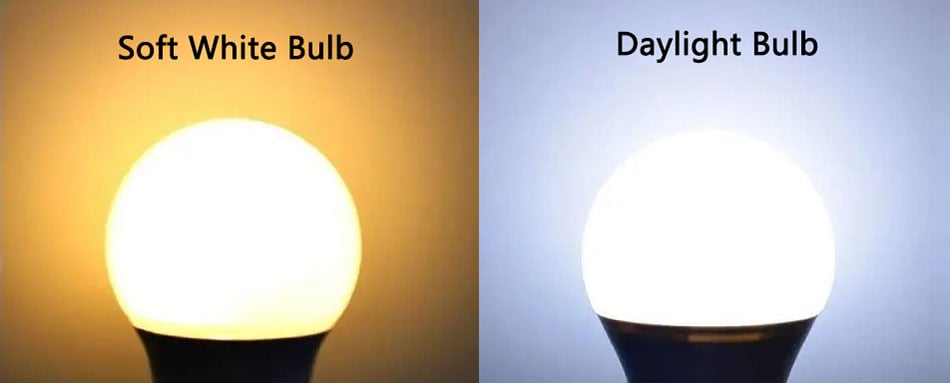
Here is the fastest way to compare the two most popular LED color temperatures before you buy:
| Fonctionnalité | Soft White | Daylight |
|---|---|---|
| Light appearance | Yellowish-white, light orange hue | Bright blueish-white hue |
| Température de couleur | 2 700 000 à 3 000 000 | 5000K–6500K |
| How it feels | Cozy, relaxing, comfortable | Crisp, invigorating, alert |
| Idéal pour | Bedrooms, living rooms, dining rooms, hallways | Kitchens, offices, garages, workshops, bathrooms |
| Energy use | Same LED efficiency, different tone | Same LED efficiency, different tone |
Key Differences Between Soft White and Daylight
Beyond the color itself, the two tones change how a space feels and how your eyes respond. These are the four differences that matter most when choosing:
Still not sure? Many LED strips ship in a single fixed tone, but Lightstec also offers tunable white (CCT) strips that switch between 2700K and 6500K, so you never have to choose.
Best Color Temperature for Every Room
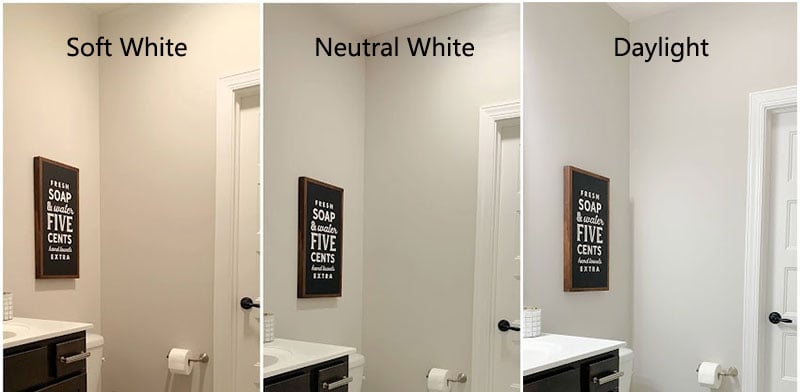
This is the question most buyers search for: which color temperature for which room? Here are the recommended Kelvin ranges for the eight most common spaces, based on how each room is used:

In a kitchen, you can combine the two on purpose: daylight under the cabinets for tasks, soft white above for atmosphere. The same layering trick works in bathrooms and home offices.
Daylight, Blue Light and Sleep: What the Research Says
This is the most asked question about daylight bulbs: is bright, cool light bad for you? The short answer — it depends on the time of day.
Daylight-temperature light (5000K+) contains a high proportion of blue wavelengths. During the day, blue light actually supports your circadian rhythm, alertness and mood. The problem is exposure at night: studies show that evening blue light suppresses melatonin, the sleep hormone, delays falling asleep and shortens the melatonin release window. Warm light below 2700K–3000K is far less stimulating before bed.
Practical rule: enjoy daylight in kitchens, offices and garages during the day; switch bedrooms, bedside lamps and lounge lighting to soft white 2700K–3000K in the evening. If you light a whole room with tunable white strips, simply dim the color temperature as bedtime approaches.
Tunable White: Get Both Tones in One LED Strip
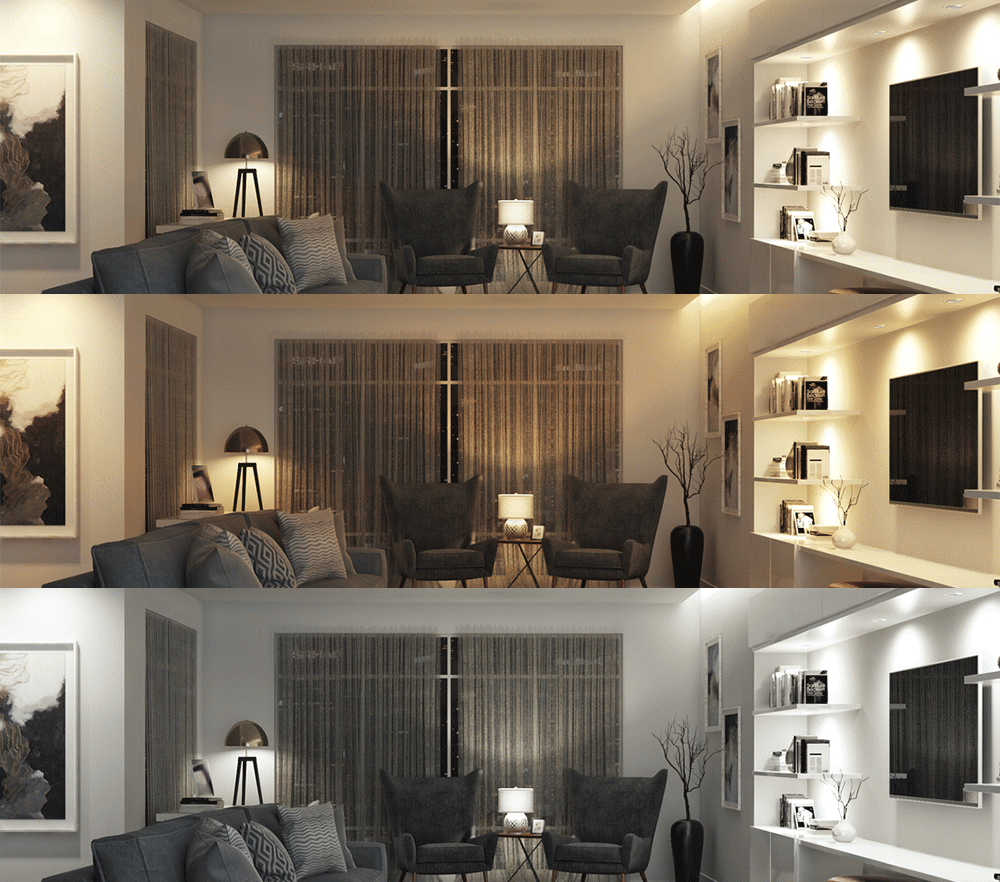
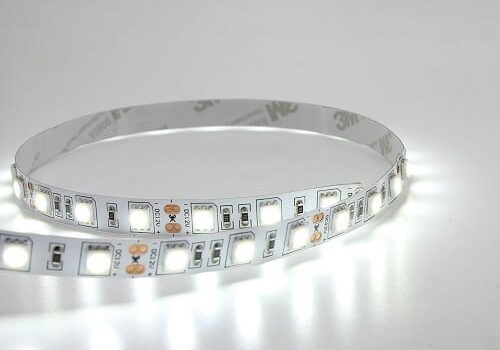
Why pick one color temperature when a single strip can do both? Tunable white (CCT) LED strips pair warm 2700K–3000K chips and cool 5000K–6500K chips in one tape, letting you slide between them with a controller or remote. It is the easiest way to make one room serve both relaxing evenings and focused daytime work.
2700K vs 6500K is the full range of this flexibility: set a cozy 2700K for movie night, a neutral 4000K for cleaning, and a bright 6000K for reading fine print — all from the same strip. For lighting projects and wholesalers, tunable white also means one SKU covers more applications. See how Lightstec builds tunable white LED strip lights from the factory.
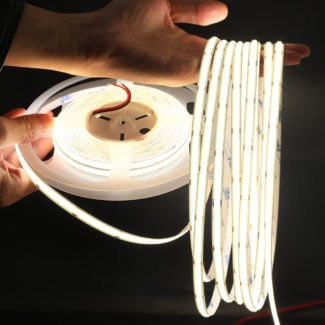
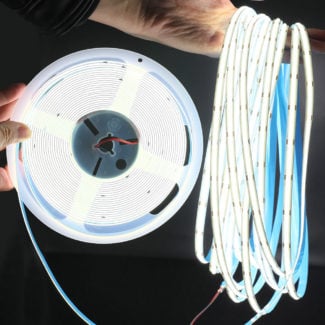
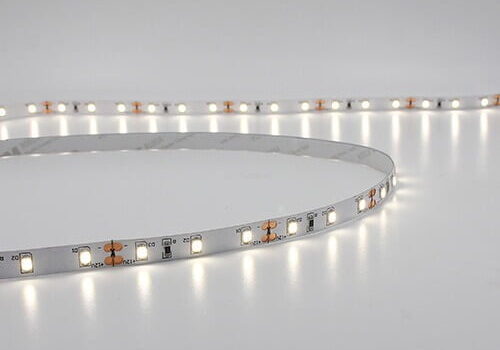
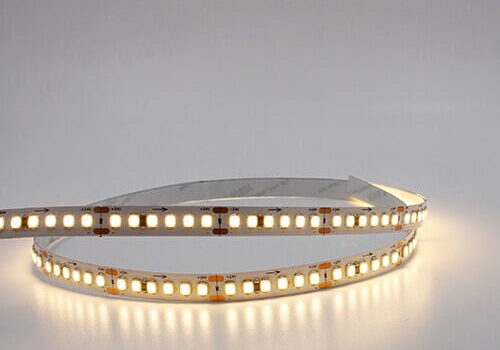
Produits de bandes LED recommandés
Cliquez sur n'importe quel produit pour afficher les spécifications et demander un devis :

LED Color Temperature FAQ
Conclusion
Soft white and daylight are not better or worse — they are different tools for different rooms. Use soft white 2700K–3000K where you relax, sleep and gather; use daylight 5000K–6500K where you work, cook and need clarity; and use neutral 3500K–4500K as the middle ground for kitchens and bathrooms.
If your project needs both tones or custom color temperatures, Lightstec manufactures Bandes lumineuses LED from the factory in China, from single-color 2835/5050 strips to tunable white CCT strips — contact us for samples and wholesale pricing.

Pour vous faire gagner du temps, nous avons préparé un catalogue PDF avec tous nos derniers produits d'éclairage LED. Laissez votre email et recevez-le immédiatement.

Fondateur de Lightstec.Diplôme d'ingénieur.Plus de 13 ans d'expérience professionnelle dans le secteur de l'éclairage à LED.Familial avec la production de produits d'éclairage à LED.Ce blog vous partage vos connaissances et vos solutions en matière d'éclairage à LED.Bienvenue dans l'approvisionnement en lumières à LED en Chine.
Apprenez-en davantage sur des cours dispensés par des professionnels que moins de gens vous disent avant de vous tromper.