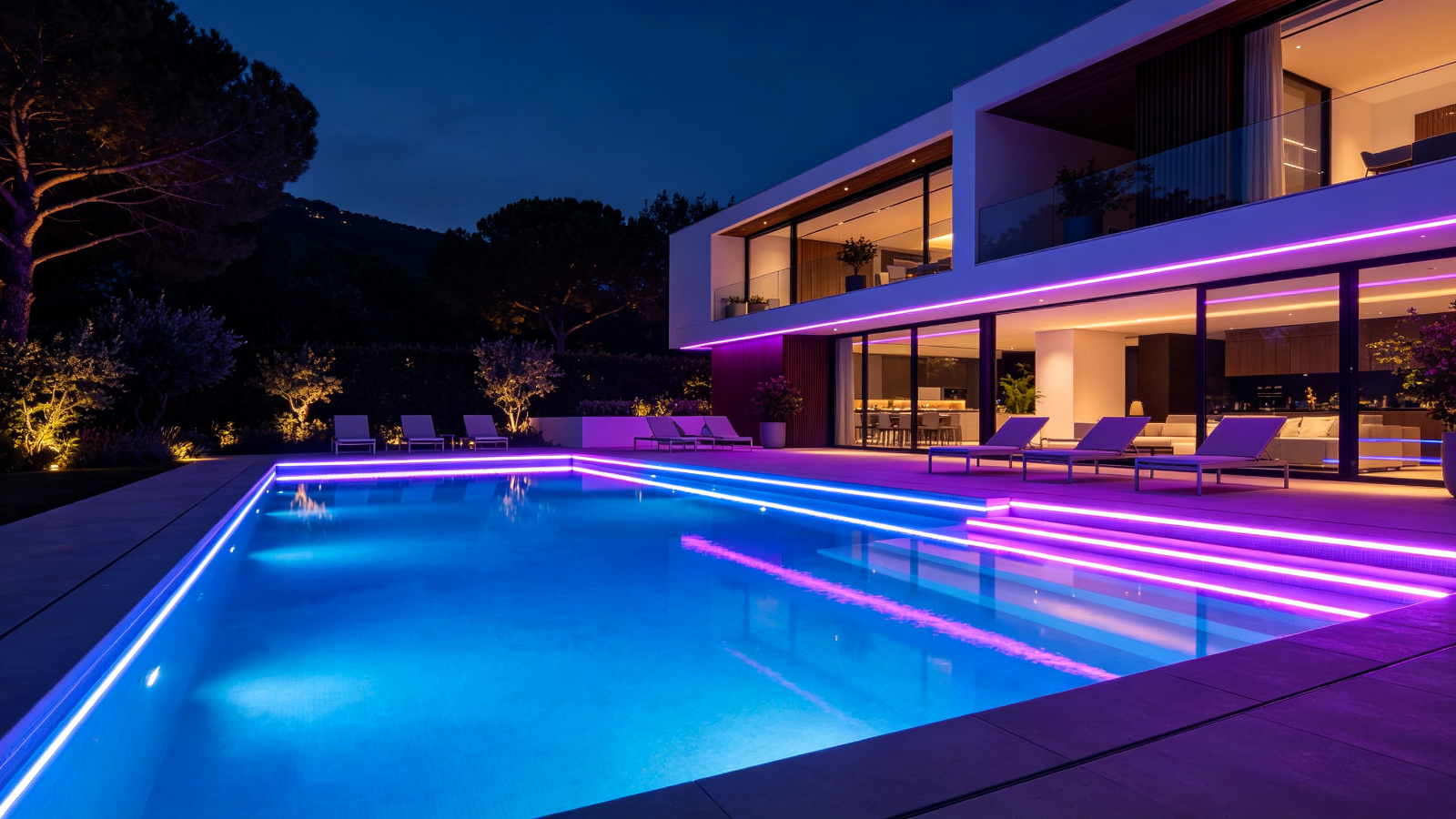
Underwater LED strip lights transform pools, fountains, and water features into stunning visual experiences — but choosing the wrong product can lead to leaks, electrical hazards, and early failure. This comprehensive guide covers everything you need to know about IP68 underwater LED strip lights: safety, materials, applications, installation, and how to pick the right product for your project.
On This Page
Why IP68 Is Non-Negotiable for Underwater Use
Not all “waterproof” LED strips are the same. The IP (Ingress Protection) rating tells you exactly what the product can withstand. For anything that lives permanently underwater, only IP68 is acceptable.
| Clasificación IP | Protection Level | Where You Can Use It |
|---|---|---|
| IP65 | Dust-tight, water jets from any direction | Outdoor covered areas, rain exposure |
| IP67 | Dust-tight, temporary immersion (up to 30 min, 1m) | Splash zones, occasional splashes, deck lighting |
| IP68 | Dust-tight, continuous submersion (1m+ for indefinite periods) | Pools, fountains, waterfalls, spas, underwater installations |
IP67 strips are designed for temporary splashes — they will fail if permanently submerged. A pool step or fountain basin needs IP68 because the light must survive months or years of continuous water contact, pressure, and chemical exposure. Always confirm the rated submersion depth with the manufacturer (typically 1–3 meters for pool use).
Electrical Safety: Low Voltage Is the Only Safe Choice
Water and electricity are a dangerous combination. The golden rule for pool and water-feature lighting is simple: never use mains voltage (110V/220V) underwater. All underwater LED strips must run on safe extra-low voltage (SELV):

12V DC
The safest option for residential pools. Voltage drop limits runs to ~5 meters, so use multiple shorter runs with separate power supplies.
24V DC
Better for longer runs (up to 10 meters) and higher-density strips. Still completely safe for human contact. Preferred for commercial pools and larger installations.
⚠ Critical: Always use a certified low-voltage LED driver (not a regular AC adapter). The driver must be installed outside the pool enclosure in a dry, accessible location. The output cables run from the driver to the underwater strip through sealed conduits.
Material Matters: Silicone vs PVC
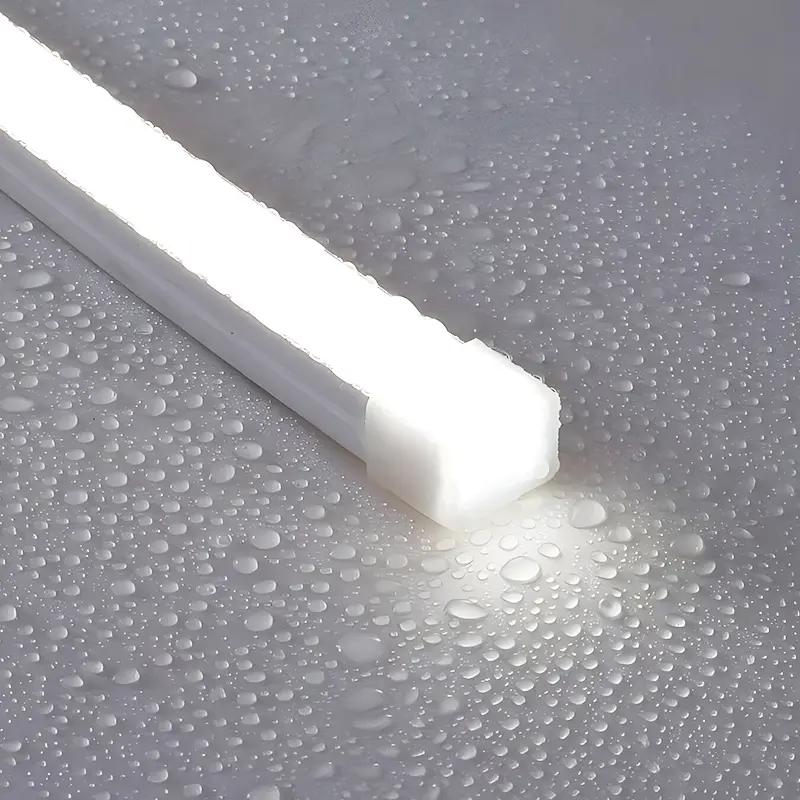
The encapsulation material determines whether your strip survives years in chlorinated or saltwater. Cheap PVC coatings yellow, crack, and allow water ingress within 1–2 seasons. Solid silicone extrusion is the industry standard for underwater use.
✓ Silicone Encapsulation
UV-resistant, chlorine/saltwater-proof, flexible down to −40°C, translucent glow. Lasts 50,000+ hours underwater. This is what you want for pools and fountains.
✗ PVC Coating
Cheap and flexible, but yellows and hardens under UV and chlorine. Water seeps through micro-cracks. Suitable for IP65/IP67 outdoor use only — never for permanent submersion.
Top Applications: Pools, Fountains & Water Features
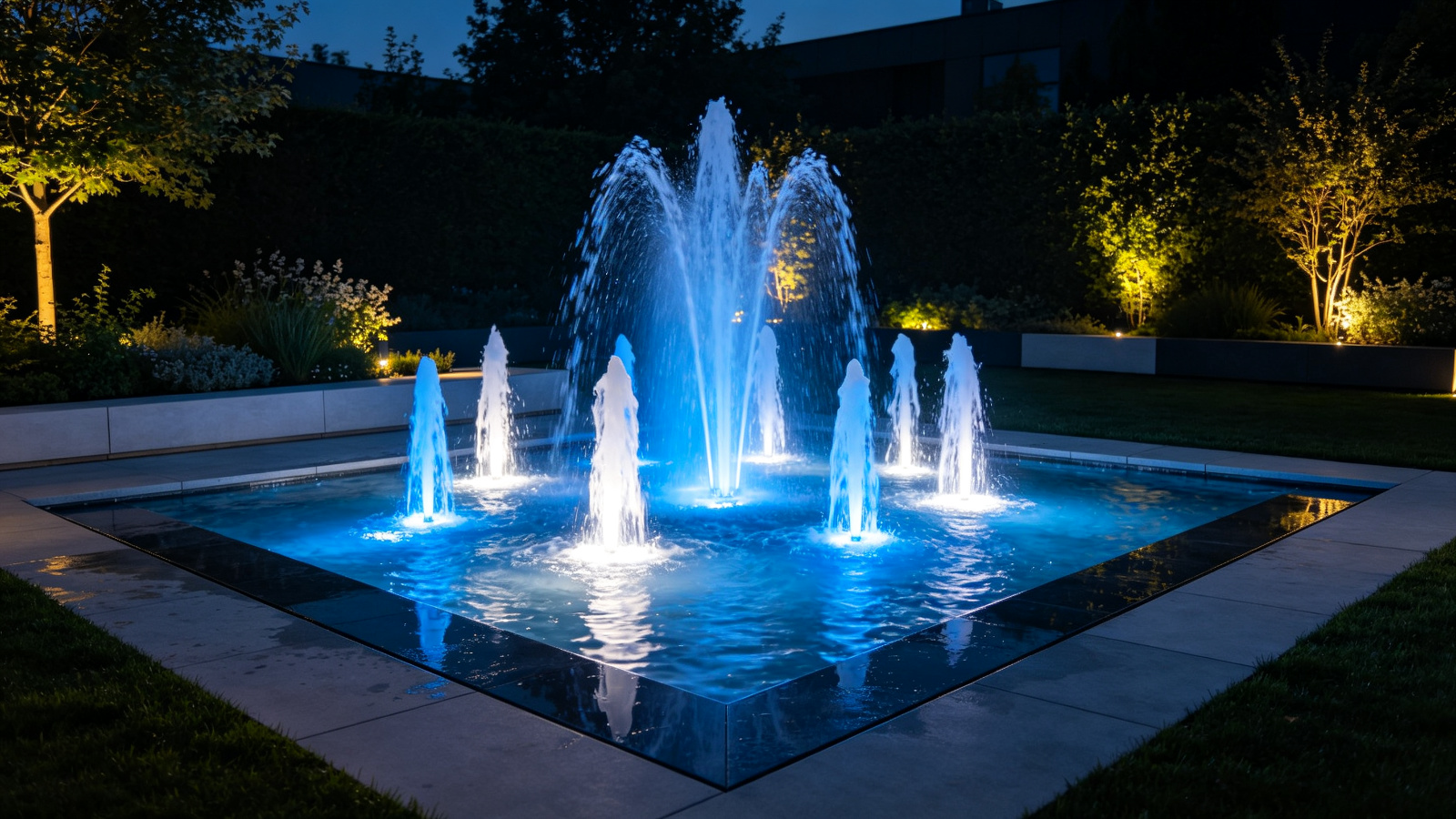
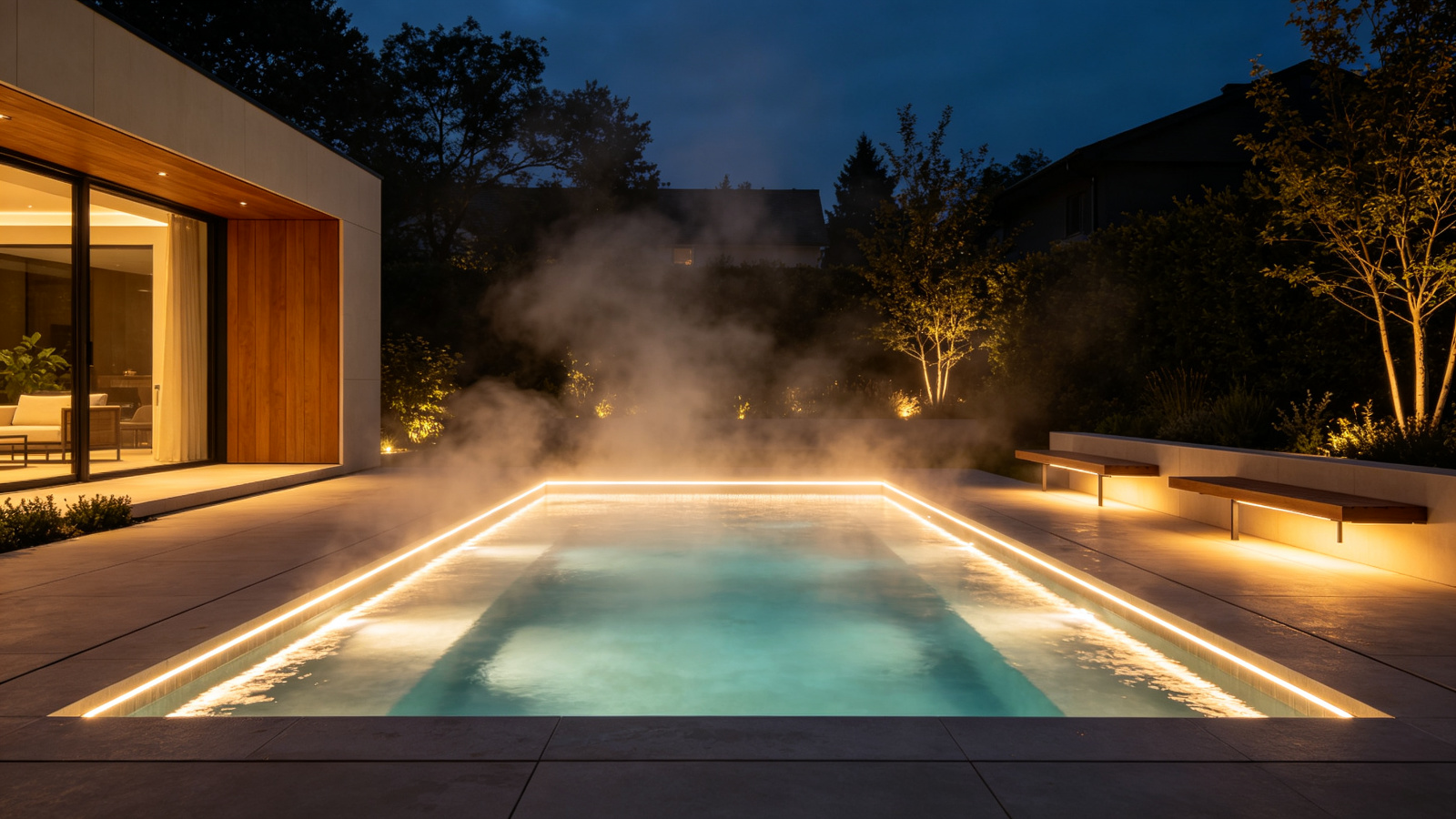
IP68 underwater LED strips are used across a wide range of water feature projects. Here are the most common applications:
Swimming Pools
Install in pool steps, coping edges, benches, and perimeter walls. RGB color-changing creates a resort atmosphere. Use for night swimming safety.
Aquariums & Fish Tanks
Submersible strips for freshwater and saltwater aquariums. Full-spectrum or blue-white to support coral and plant growth.
Ponds & Water Gardens
Line pond edges, stream beds, and under water plant shelves. Low-voltage strips are safe around fish, wildlife, and children.
Facade & Landscape
IP68 neon flex for wet facades, bridge underlighting, and garden features exposed to heavy rain. Also ideal for pool decks and outdoor showers.
LED Strip vs Neon Flex: Which to Choose
Both are available in IP68 versions, but they produce different effects and suit different installations.
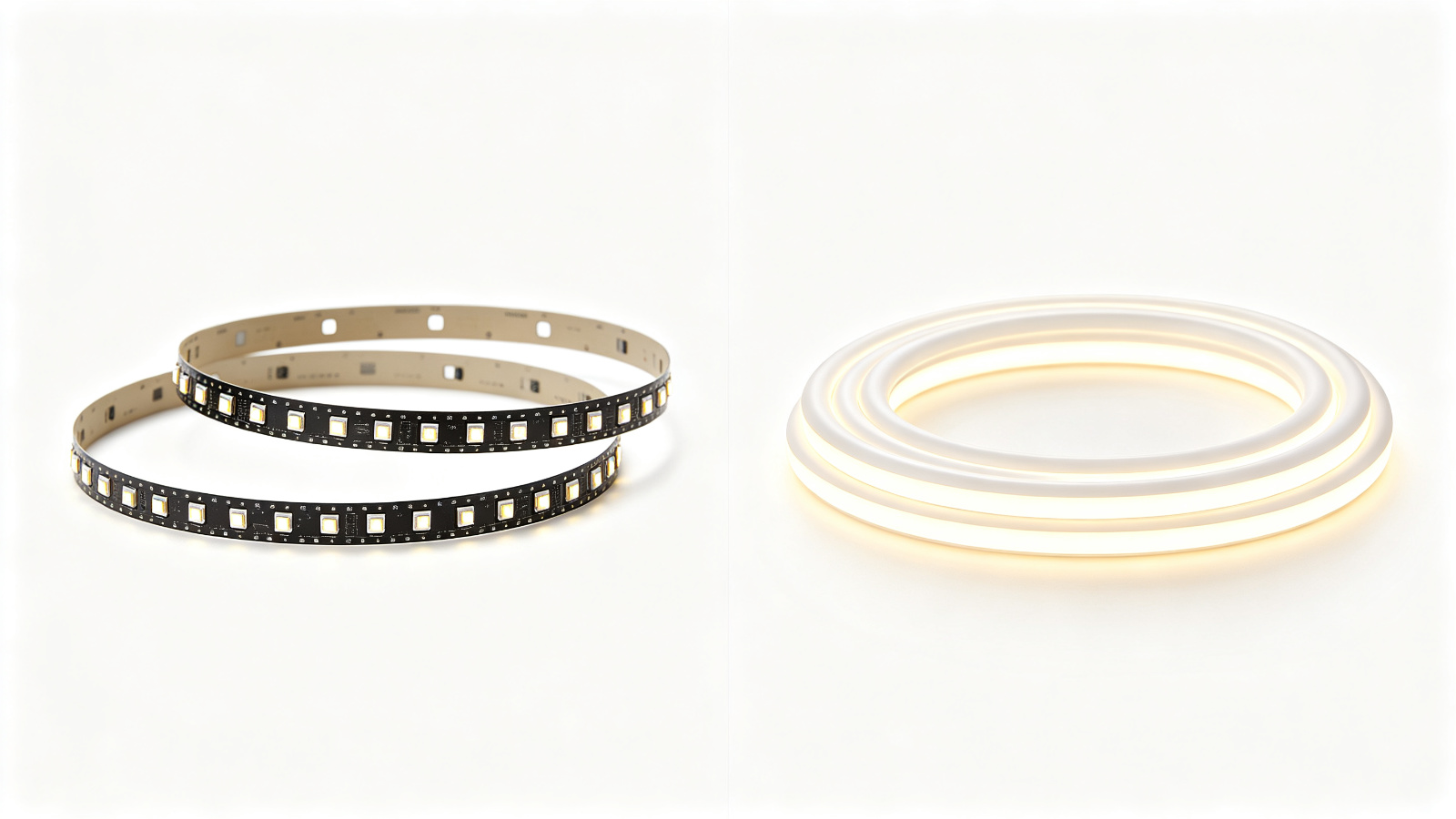
| Característica | IP68 LED Strip | IP68 Neon Flex |
|---|---|---|
| Light effect | Dotted/point light (even with diffuser) | Continuous line glow (neon-like) |
| Lo mejor para | Housing in aluminum profiles, hidden in grooves | Direct surface mounting, visible edges |
| Bending radius | Very small (S-type strips for tight curves) | Larger (15–50mm depending on model) |
| Thickness | Thin (2–3mm silicone sleeve) | Thicker (8–16mm round/square) |
| Typical use | Pool steps, niche installations, under coping | Pool perimeter, fountain outlines, water features |
Installation Best Practices
Poor installation causes more underwater light failures than poor product quality. Follow these six rules:
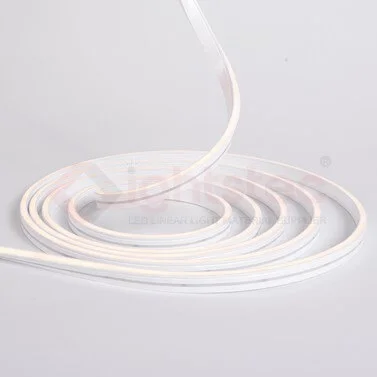
LT-NS0612 Side-Bend Neon Flex
6x12mm side-bend, IP68 silicone, 12V/24V. Ideal for pool coping edges and step lighting.
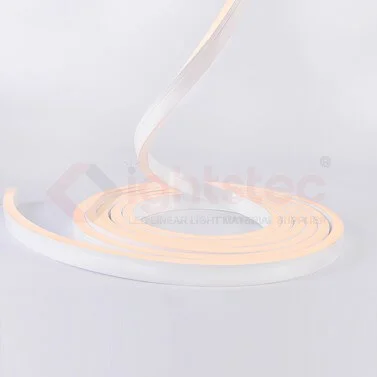
LT-NS1220 Side-Bend Neon Flex
12x20mm, higher lumen output, IP68. Best for large pool perimeters and fountains.
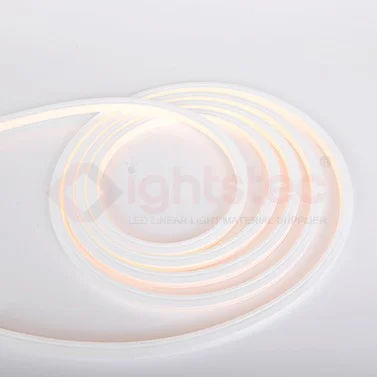
LT-NS1515 Square Neon Flex
15x15mm square profile, even glow on all sides. Great for water feature outlines.
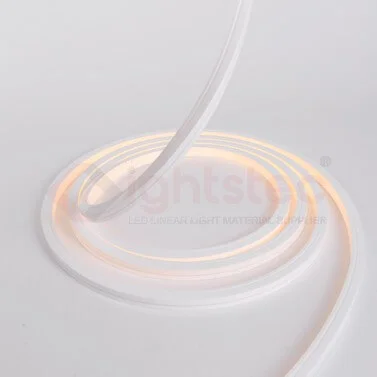
LT-NT1515 Top-Bend Neon Flex
15x15mm top-bend, smooth vertical curves. Perfect for spa loungers and wall details.
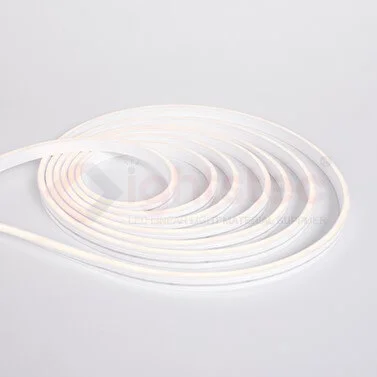
LT-U0612 3D-Bend Neon Flex
6x12mm multi-directional bend, IP68. Custom shapes for artistic underwater installations.
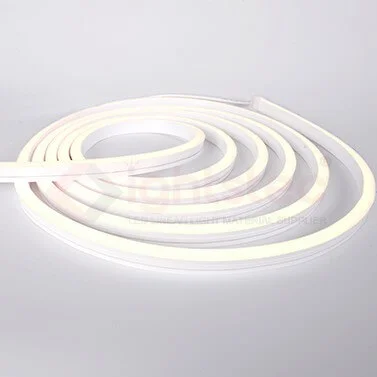
LT-U1515 3D-Bend Neon Flex
15x15mm, RGB / RGBW options available. Full color control for pool and landscape.
Preguntas frecuentes
Can I use IP65 or IP67 LED strips in my pool?
No. IP65 and IP67 strips are not designed for continuous submersion. Water will eventually penetrate the coating, corrode the PCB, and cause failure or electrical hazards. Only IP68-certified strips should be used underwater. IP67 is fine for pool deck edges and splash zones.
Are IP68 LED strips safe for saltwater pools?
Yes, if the strip uses solid silicone encapsulation and tinned copper wire. Saltwater is more corrosive than chlorine-treated freshwater, so avoid PVC-coated strips entirely. Look for products specifically rated for marine or saltwater environments. Lightstec’s IP68 strips use marine-grade silicone.
How long do underwater LED strips last?
High-quality IP68 silicone strips rated at 50,000–70,000 hours typically last 5–8 years in a pool environment. Cheap PVC strips may fail within 1–2 years due to water ingress and UV damage. The driver and controller usually outlast the strip.
Can I cut IP68 strips and reconnect them?
Yes, but every cut point and connector must be re-sealed with heat-shrink tubing filled with silicone gel or IP68-rated waterproof connectors. Factory-sealed strips are more reliable. For custom lengths, order pre-cut strips from a manufacturer — see our waterproof LED strip range.
Do I need a professional to install underwater LED strips?
For simple decorative applications (pond edges, fountain basins), a competent DIYer can handle it. For permanent pool installations, we strongly recommend a licensed electrician for the low-voltage wiring, GFCI protection, and sealed conduit. Browse our LED strip products o contact our engineering team for project-specific advice.
Need IP68 Underwater LED Strips for Your Project?
Lightstec manufactures IP68 waterproof strips, neon flex, and aluminum profiles for pools, fountains, and water feature projects in 50+ countries.
Obtenga más clases dirigidas por profesionales que menos personas le dirán antes de cometer un error.