Office lighting is no longer a row of fluorescent panels. Modern workplaces use layered, low-glare, human-centric light to improve comfort, focus and energy efficiency — and LED strips and aluminium profiles are now core tools for building it.
This guide explains office lighting from specification to installation: the lux, UGR and CRI numbers that matter, colour temperature and tunable white, indirect linear design with LED strips, glare control, zoning and controls, and how to choose the right strip for each office zone. It is written for facility managers, office designers, contractors and lighting buyers.
- Office Lighting Standards: Lux, UGR and CRI
- Colour Temperature: 4000K Standard and Tunable White
- Layered Lighting: Ambient, Task and Accent
- Indirect Linear Lighting with LED Strips and Profiles
- Glare Control: Shielding and Viewing Direction
- Controls and Zoning: Dimming, Daylight and Occupancy
- Choosing the Right LED Strip: SMD, COB and Tunable White
- Planning a Mock-up Before Full Rollout
- Recommended Lightstec Products
- FAQ
1. Office Lighting Standards: Lux, UGR and CRI
Every office lighting specification starts with three numbers — illuminance (lux), glare (UGR) and colour rendering (CRI):
| Parameter | Typical office requirement | Why it matters |
|---|---|---|
| Illuminance | 300–500 lux at 0.75 m work plane (EN 12464-1) | Reading, writing and screen work need a maintained light level; 500 lx for general office, 750 lx+ for drawing/technical work |
| UGR | ≤ 19 | Limits glare from luminaires in normal sight lines — the difference between comfortable and fatiguing offices |
| CRI | Ra ≥ 80 minimum; 90+ recommended | Accurate colour for documents, products and skin tones; high-CRI strip keeps white paper and screens looking natural |
Uniformity also matters: EN 12464-1 asks for U0 ≥ 0.4 on the work plane, meaning no dark corners where contrast is harsh. Directives such as ASHRAE 90.1 and WELL v2 add energy limits and daylight-responsive controls on top — an LED strip system with zoning and dimming helps you meet them.
2. Colour Temperature: 4000K Standard and Tunable White
Colour temperature sets the mood and the function of an office:
| Colour temperature | Effekt | Best office zone |
|---|---|---|
| 3000 K warm white | Relaxed, inviting | Reception, lounge, breakout areas |
| 4000 K neutral white | Clean, alert, colour-accurate | Open-plan and general offices — the workplace standard |
| 5000–6500 K cool white | Energising, bright | Technical, meeting and focus tasks in short bursts |
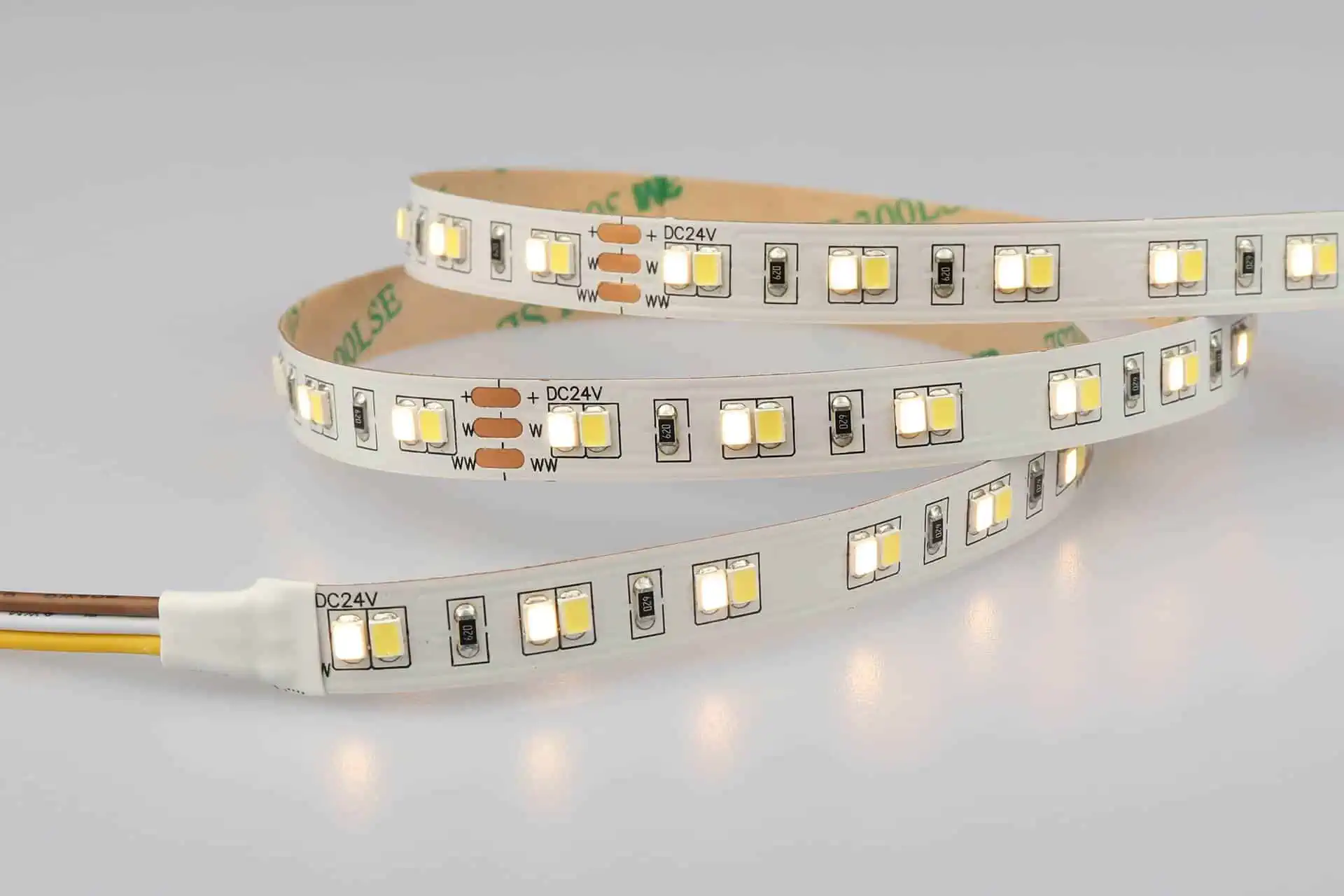
| Tunable white | Dynamic, human-centric | Whole-floor circadian lighting |
Tunable white (2700–6500 K) is the fastest-growing office trend. Following the circadian curve — cooler and brighter in the morning, warmer toward the evening — supports alertness and wellbeing. Studies on human-centric lighting report measurable gains in focus and fewer errors during the afternoon slump.
See our colour temperature guide for a deeper comparison of 3000 K vs 6000 K.
3. Layered Lighting: Ambient, Task and Accent
One luminous element cannot serve an entire office. Good office lighting is layered around work patterns:
Layering also creates flexibility: the ambient layer can dim to 50% during screen-heavy tasks, while task light keeps the work plane at 500 lx. This is the design principle behind every modern office lighting scheme.
4. Indirect Linear Lighting with LED Strips and Profiles
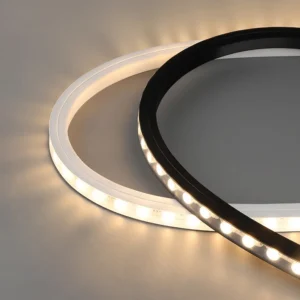
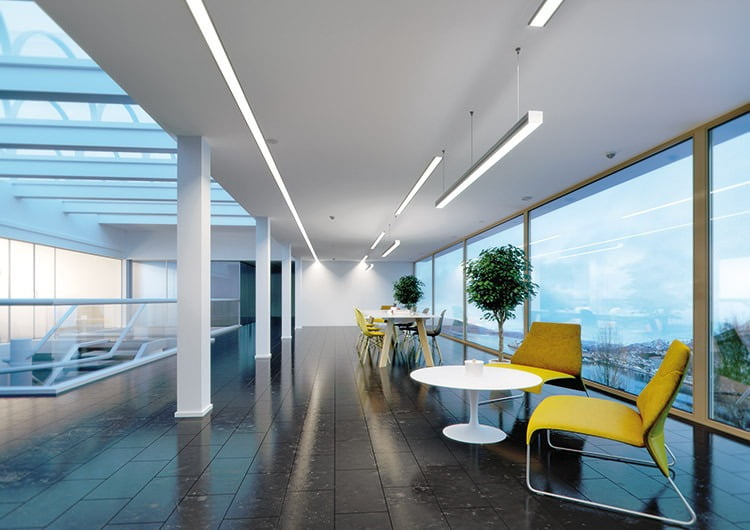
Indirect lighting is the most comfortable office strategy: light bounces off the ceiling and walls instead of hitting the eye directly. LED strips make it practical:
- Ceiling coves and tray ceilings — a strip in a recessed channel washes the ceiling, creating soft ambient light with no visible source.
- Suspended linear pendants — 80/20 or 100% indirect distribution at 300–400 mm below the ceiling delivers 400–500 lux on desks by reflection alone.
- Wall lines and skirting — LED channels mounted on the wall add a clean architectural light line.
- Desk and shelving integration — low-profile strips under shelves provide task light without glare.

Aluminium profiles are what make these installations last — they dissipate heat, shield the strip and give a clean finish. Our LED aluminium profiles range covers cove, surface and recessed channels for office work.
5. Glare Control: Shielding and Viewing Direction
Glare is the #1 complaint in badly lit offices. It comes from bright sources in the normal line of sight — including bare LED strip:

Wall-wash profiles are a proven way to light vertical surfaces evenly and without glare — see our wall wash profile guide.
6. Controls and Zoning: Dimming, Daylight and Occupancy
A lighting system is only as smart as its controls. Modern offices zone and automate:
| Kontrollere | Fordel | Strip implementation |
|---|---|---|
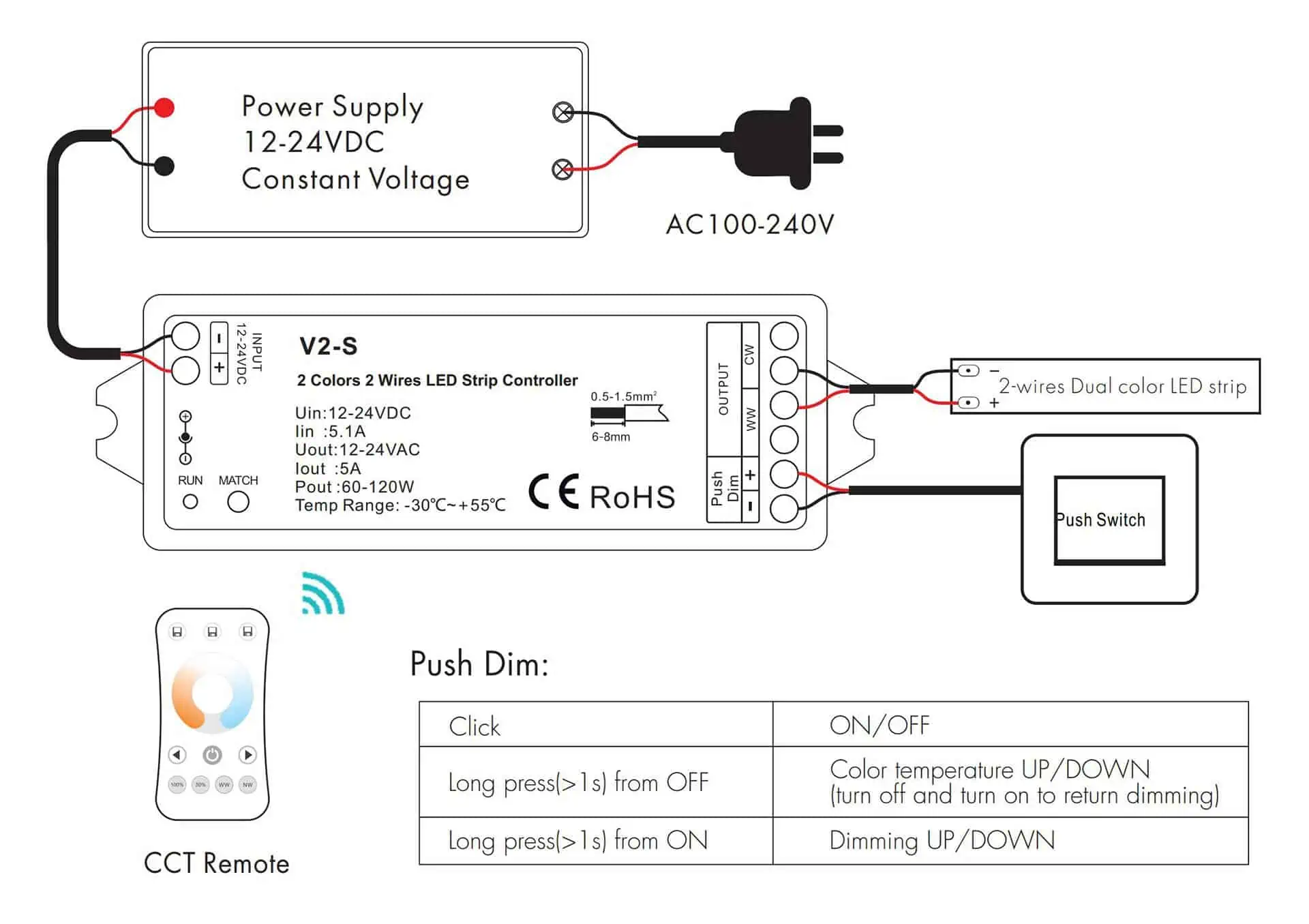
| Dimming | Comfort and energy saving (30–50% cuts are common) | Trailing-edge or 0–10 V dimmable driver, or tunable-white controller |
| Daylight response | Dim near windows automatically | Light sensor on the DALI/DMX zone |
| Occupancy sensing | Lights off in empty meeting rooms | Presence sensor switching the strip zone |
| Scene presets | Meeting / focus / presentation modes | Tunable white controller with saved scenes |
Zone planning happens on the space plan, not the ceiling plan: align lighting zones with desks, meeting areas and circulation. Controls cut energy, extend strip life and let one installation serve many activities.
7. Choosing the Right LED Strip: SMD, COB and Tunable White
For office strip lighting, three families dominate — each suited to a different role:
| Strip type | Bedst til | Why |
|---|---|---|
| SMD2835 high-density | Ambient coves and continuous lines | High efficiency (130–160 lm/W), even light, CRI 80–97 options |
| COB strip | Visible, low-height applications | Dot-free continuous band — no LED spots under diffusers |
| Tunable white | Human-centric whole-floor lighting | 2700–6500 K in one strip with a 2-wire controller |
| RGB / addressable | Branding and feature accents | Colour scenes for lobby and reception moments |
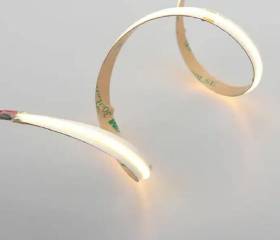
Check the IES reports and photometric data before specifying — our IES report guide explains how to read them, and our COB buying guide covers dot-free selection in detail.
8. Planning a Mock-up Before Full Rollout
Office lighting is installed once and lived in for years. A mock-up is cheap insurance:
- Build one real office bay with the actual strip, channel, diffuser and ceiling finish.
- Test at working brightness — lux on the desk, UGR from a seated position, screen reflections.
- Compare output, diffusion, cut increment and run length against the specification.
- Confirm controls, environment and viewing distance on the representative sample before approval.
- Measure colour temperature at several dimming levels — tunable white must stay consistent across scenes.
Suppliers with in-house testing (like Lightstec’s integrating-sphere and IES checks) make this step fast and reliable.

9. Recommended Lightstec Products for Office Projects
Anbefalede LED Strip-produkter — click any product to view specifications and request a quote:
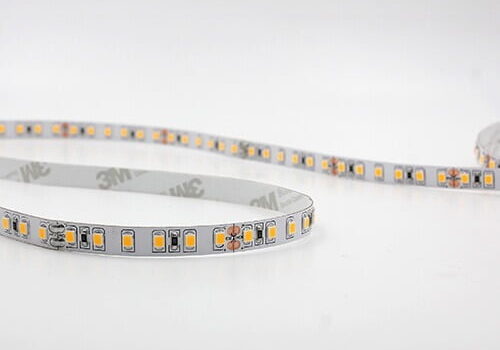
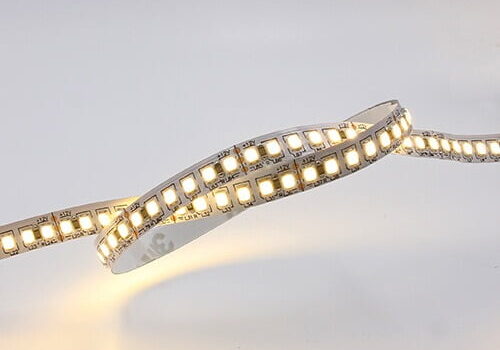
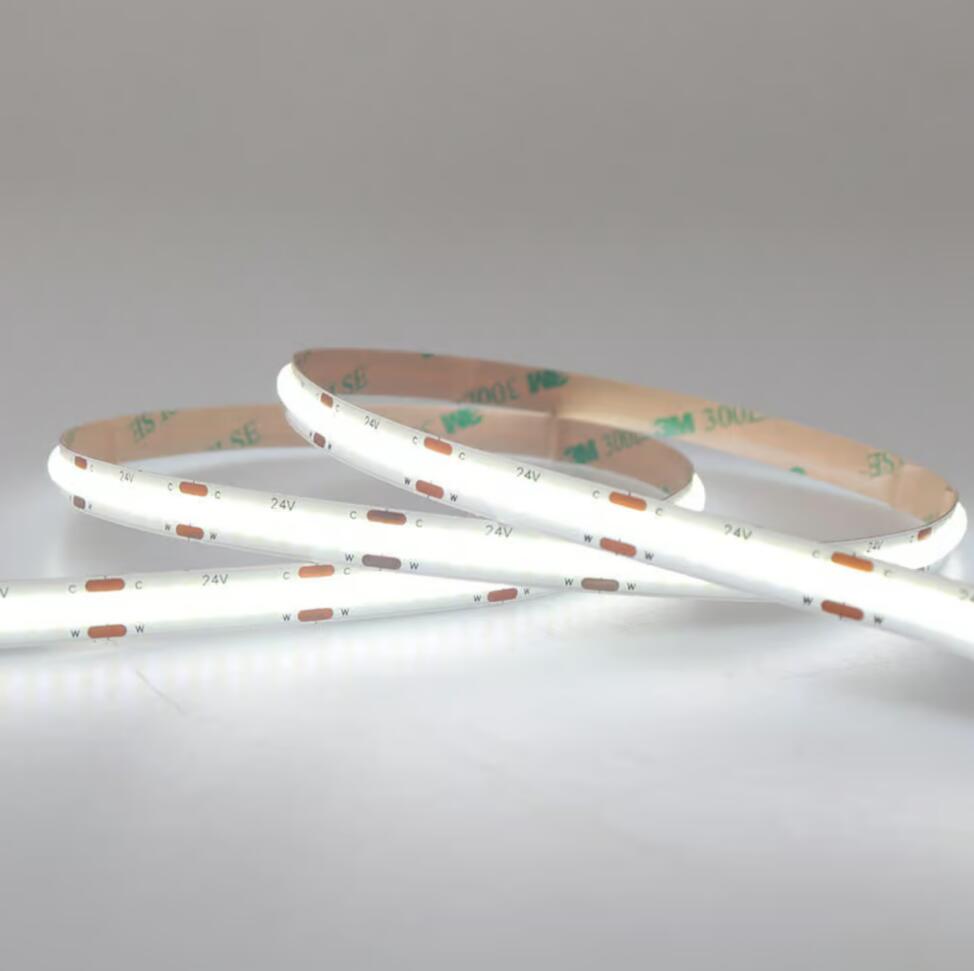


Every Lightstec strip is tested with integrating-sphere and IES checks before shipment. For project specifications, mock-ups and samples, contact the Lightstec team.
FAQ
Send Lightstec your floor plan, lux targets and controls preference — we will recommend the right strip, channel and tunable-white system with IES data.
Kontakt Lightstec

Download vores seneste katalog som PDF
For at spare dig tid har vi udarbejdet et PDF-katalog med alle vores nyeste LED-lysprodukter. Efterlad din e-mail og få den med det samme.

Lær mere professionelle led-kurser, som færre mennesker fortæller dig, før du tager fejl.