Great bar lighting doesn’t just look good — it sells more drinks, extends customer dwell time, and turns a room into a destination. But designing bar lighting is more than sticking an RGB strip behind the bottles. It requires layering white light for staff and product, colored light for atmosphere, and a control system that lets the bar manager switch between “opening,” “happy hour,” “Friday night,” and “closed” scenes in seconds.
This guide covers everything lighting designers, bar owners, and contractors need to know about LED strip lighting for bars — from back-bar shelf specs to DMX control systems.
Na tej strani:
Why LED Strips Are the Backbone of Modern Bar Lighting

LED strip lighting has transformed bar design over the past decade. Traditional bars relied on bulky pendants, wall sconces, and surface-mounted tubes — all of which limit where light can go. LED strips are thin, flexible, and can be hidden inside almost any millwork detail: under shelves, behind the bar top, inside coves, along baseboards, and within bottle displays.
The result is a space that feels larger, more polished, and more atmospheric than a bar lit by fixtures alone. Key advantages:
- Hidden integration — strips disappear into joinery; guests only see the effect, not the light source.
- Color + white in one product — RGBW and RGBCCT strips deliver both mood color and usable warm white.
- Low voltage, safe near spills — 24V DC strips are safe to touch even when wet.
- Dimmable and scene-ready — compatible with DMX, DALI, 0-10V, and RF remote systems.
- Energy efficient — a fully lit bar runs on a few hundred watts, compared to thousands with halogen.
The 4 Layers of Bar Lighting
The most common mistake in bar lighting is using one RGB strip to do every job. When color-changing light is also the task light behind the bar, staff struggle to read labels and mix drinks. Professional bar lighting separates four layers:
| Layer | Namen | Typical Product |
|---|---|---|
| 1. Task Light | Bar prep, reading labels, cleaning, POS | High-CRI white strip, 3000K, 24V |
| 2. Ambient Light | General room atmosphere, ceiling coves | COB strip or dim-to-warm, 2700K |
| 3. Product / Accent | Bottle shelves, glass display, feature walls | High-CRI RGBW or 2700K strip |
| 4. Effect Light | Neon outlines, floor strips, dance floor | RGBW, addressable RGBIC, neon flex |
Each layer runs on its own circuit and dimmer. When the bar opens, task light is bright and white; as the night goes on, ambient and effect layers ramp up and task light dims down. By closing time, the space is a completely different mood — all without changing a bulb.
Key Specs: CCT, CRI, Voltage, IP Rating
Barvna temperatura (CCT)
Bar lighting is not a single-CCT job. Different zones call for different tones:
- Bottle shelves and back bar: 2700K–3000K warm white (or 2400K–2700K for premium whiskey/wine displays). Warm amber tones make liquor and glass look rich and expensive.
- Bar top / prep area: 3000K–3500K for readable labels and accurate garnish colors.
- Seating area: 2700K for relaxed, intimate mood.
- Effect / accent lighting: RGBW or RGBCCT — the white channel should still be 2700K–3000K so the “white” scene doesn’t look blue or clinical.
CRI: Why It Matters Behind the Bar
If your bottles look dull and your cocktail garnishes look wrong, the strip CRI is too low. Specify CRI ≥ 90 for all product-display zones, and CRI 95+ with positive R9 where whiskey, wine, or food is on display. A warm 2700K strip with poor red rendering still makes expensive bourbon look brown and lifeless.
Voltage: 24V, Not 12V
Bar projects almost always call for 24V strips. 24V supports longer runs (up to 10m before noticeable voltage drop), uses thinner cables, and dims more smoothly. 12V is only suitable for short decorative runs under 3m.
IP Rating Near the Bar
Bar counters see spills, cleaning spray, and condensation. Use IP54–IP65 strips or fully enclosed aluminum profiles with silicone gaskets for any zone near the bar well, ice bin, or glass wash. Drivers and controllers should always be mounted away from wet zones — never inside the bar base.
Bar Lighting by Zone: Where to Put the Strips
Back Bar / Bottle Shelves

The back bar is the bar’s billboard. LED strips under each shelf, aimed upward at the bottles above, create a glowing display that drives premium bottle sales. Key tips:
- Uporaba high-density COB or RGBW strips (60+ LEDs/m) in an aluminum profile with a frosted diffuser — visible LED dots look cheap on a back bar.
- Mount the strip at the back of the shelf, aimed upward, so bottles are lit from behind and below.
- Test with real bottles before installation — shelf depth and bottle height determine the right strip position.
- For premium spirit displays, use 2400K–2700K high-CRI white. For sports bars or clubs, use RGBW with a programmable white channel.
Bar Front / Counter Edge
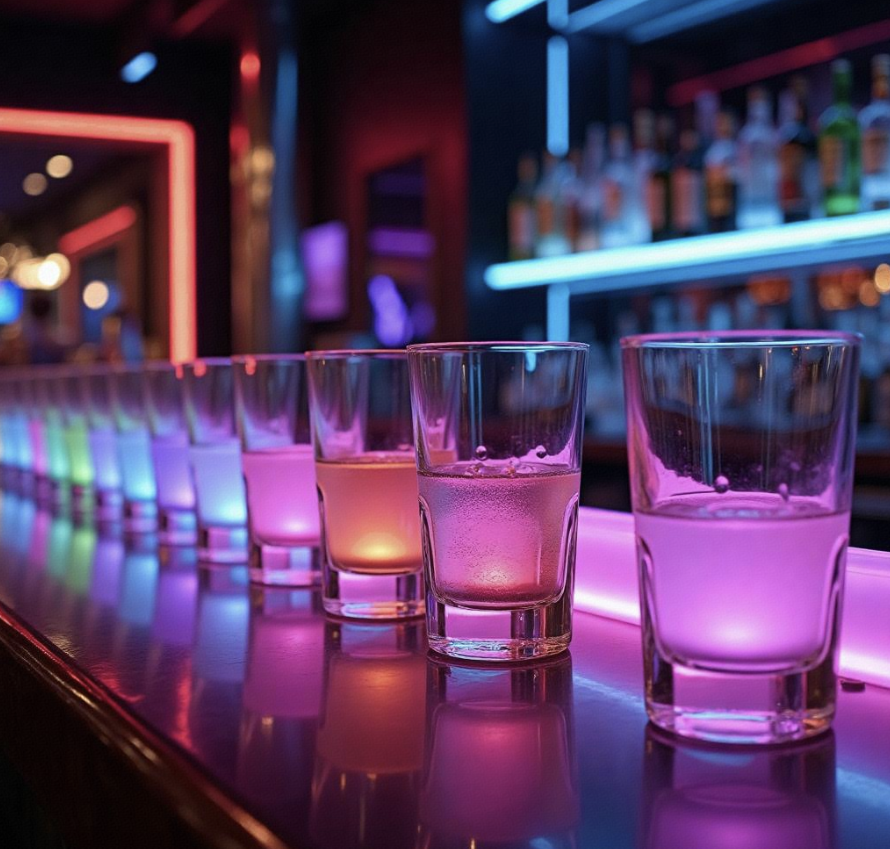
LED strips under the bar overhang, facing down toward the floor, create a “floating bar” effect. This is one of the cheapest, highest-impact lighting upgrades any bar can make. Use RGBW strips for color-changing nights, or a dim-to-warm white strip for a more sophisticated cocktail bar.
Ceiling Coves

Perimeter ceiling cove lighting washes the ceiling in indirect light, making the room feel taller and more spacious. Use COB strips in a recessed aluminum profile — the cove depth must be sufficient (at least 150mm) so the strip itself is not visible from standing eye level.
Floor / Toe-Kick / Stair

Low-level strips at floor level guide guests through the space and add drama. Use addressable RGBIC strips for chase effects, or static RGBW for a calm wash. Always use a slim floor profile rated for foot traffic.
Feature Walls & Neon Signage
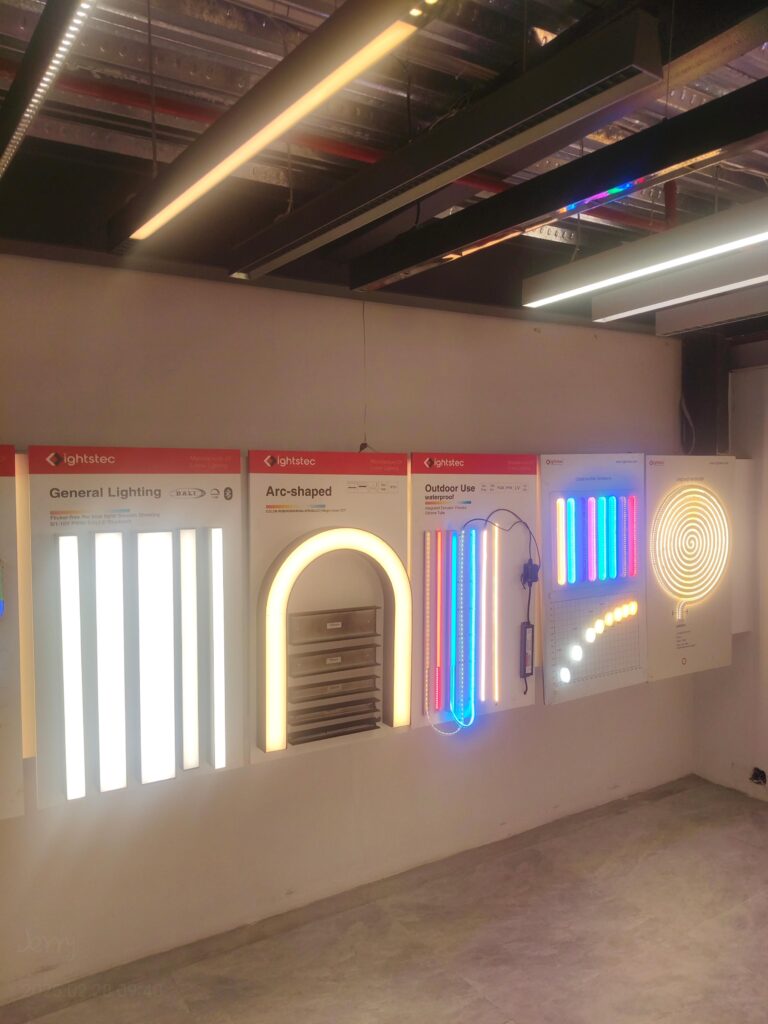
Po meri LED neon flex logos, brand names, and decorative outlines are now standard in craft cocktail bars, speakeasies, and sports bars. Neon flex is durable, cool-to-touch, and can be programmed with chase effects when using RGBIC neon. It replaces fragile glass neon at a fraction of the cost.
Restrooms

Bar restrooms are social media moments. Backlit mirrors, cove lighting, and vanity strips with CRI 90+ make selfies look good. Use IP44-rated strips with proper ventilation — bathrooms generate heat and humidity.
RGB vs RGBW vs Addressable: Which Strip for Your Bar?
| Vrsta traku | Najboljše za | Trade-off |
|---|---|---|
| RGB | Pure effect zones, dance floors, accent walls | White is mixed (R+G+B), looks pale and low-CRI |
| RGBW (4-v-1) | Back bars, counters, coves — color + usable white | White channel fixed at one CCT (usually 3000K or 4000K) |
| RGBCCT (5-in-1) | Premium bars, lounges — adjustable white + color | More complex wiring and control |
| Addressable RGBIC | Chase effects, pixel walls, dance floors, neon sign animation | Needs dedicated controller; not for task lighting |
| High-CRI White Only | Bottle shelves, prep areas, mirrors where product color matters | No color effects |
Rule of thumb: Use high-CRI white for product and task zones. Use RGBW for general atmosphere. Use addressable RGBIC only where animated effects are the point. Don’t let one strip type try to do all four jobs.
Control Systems: How the Bar Manager Runs the Show
The control system determines whether your lighting is a joy or a headache. For bars, choose based on project size and effect complexity:
- DMX512 — the industry standard for show bars, clubs, and cocktail lounges with programmed scenes. Each strip or zone has its own DMX address. A lighting programmer sets scenes like “Open,” “Happy Hour,” “Friday Night,” “Last Call,” and “Close.” Best for high-end venues.
- DALI — for bars integrated into hotels or restaurants with existing DALI systems. Allows per-fixture control and sensor integration.
- 0-10V / Triac — simple, low-cost dimming for white-light layers. Good for small bars where animated color isn’t needed.
- RF Remote / Wi-Fi App — for small bars, speakeasies, and home bars. The manager uses a phone app or wall panel to switch scenes. Keep it simple — staff should be able to operate it without a manual.
Design tip: Set a default “calm” scene for regular nights, with slow color transitions and brightness limits. Save fast animation and high-energy effects for programmed event moments only — flashing lights distract staff and make guests uncomfortable.
LED Aluminum Profiles: Don’t Skip Them

Bare LED strips look unfinished and overheat inside enclosed millwork. Always use an LED aluminijast profil with a frosted opal diffuser:
- Slim surface profiles — for under-shelf and under-bar applications where space is tight.
- Recessed drywall profiles — for coves and walls that should be flush and paintable.
- Waterproof profiles — for bar fronts, ice stations, and wash-down zones.
- Corner / angle profiles — for wall-to-ceiling and wall-to-floor transitions.
The profile does three jobs: it cools the strip (extending life by 2–3x), it hides the LEDs behind a diffuser (no visible dots), and it gives the installation a clean, finished edge.
Recommended LED Products for Bar Projects
Factory-direct LED strips and profiles from Lightstec — commonly specified in bar, lounge, and club projects:
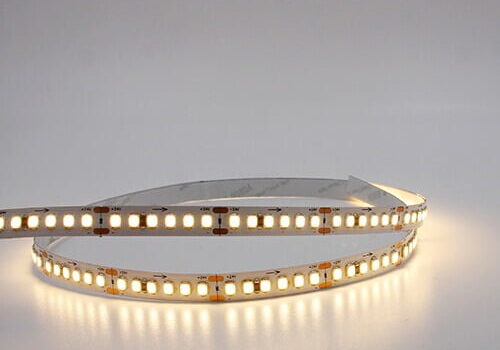
SMD2835 High-CRI Strip 24V
CRI90+, 2700K/3000K, dimmable. For bottle shelves, prep areas, and mirrors.
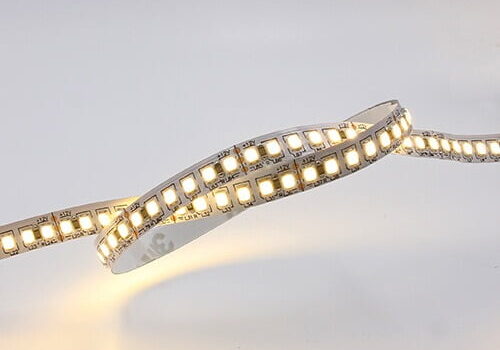
COB LED Strip 320/528 LEDs/m
Completely dotless, CRI97+. Perfect for coves and back bars where smooth light matters.
LED Neon Flex (RGBW / RGBIC)
Custom logos, outlines, and animated feature walls. IP67, 24V, DMX-addressable options.

LED aluminijasti profili
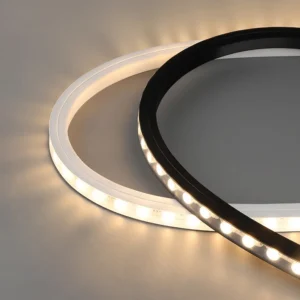
Slim surface, recessed, corner, waterproof series. Opal diffuser for dot-free light.
Pogosto zastavljena vprašanja
Is RGB or RGBW better for bar lighting?
RGBW is almost always the better choice. RGB alone can only produce color — its “white” is a mix of red, green, and blue that looks pale and low-CRI. RGBW adds a dedicated warm-white channel (typically 2700K–3000K) so you get usable ambient light alongside full color effects. Use pure RGB only for dance-floor effect zones where white isn’t needed.
What CRI do I need for back bar bottle shelves?
CRI 90 minimum. For premium whiskey, wine, or cocktail displays where bottle labels and spirit color matter, specify CRI 95+ with positive R9. A low-CRI strip makes expensive amber liquor look dull and brown.
How do I avoid visible LED dots on bottle shelves?
Three things: (1) use a high-density strip (120+ LEDs/m) or COB, (2) use an aluminum profile with a frosted opal diffuser, and (3) leave enough distance between the strip and the shelf edge. Always build a full-size mock-up with real bottles before finalizing the installation.
Can bar LED strips be controlled by DMX?
Yes — DMX512 is the standard for show bars and clubs. Each strip or zone gets its own DMX address, and a lighting programmer sets scenes (Open, Happy Hour, Weekend, Close). For smaller bars, RF remote or Wi-Fi app control is simpler and cheaper.
What IP rating do I need near the bar counter?
Use IP54 at minimum for zones near spills and cleaning spray. IP65 for direct splash zones. Always keep drivers and controllers in dry, ventilated — and serviceable — locations.
12V or 24V for a bar project?
Use 24V. It supports longer runs (up to 10m per driver), uses thinner cables, and dims more smoothly. 12V is only for short decorative runs under 3 meters.
How do I plan power for a bar project?
Divide the bar into electrical zones. Don’t put the whole bar on one driver — a single failure shouldn’t black out the entire venue. Keep drivers ventilated and accessible. Calculate voltage drop for long runs (over 5m on 24V, over 3m on 12V) and inject power mid-run where needed.
Source Your Bar LED Lighting from Lightstec
Lightstec supplies LED strips, neon flex, and aluminum profiles to bar, lounge, club, and restaurant projects across 80+ countries. We work with lighting designers, contractors, and bar owners to specify the right strip type, CCT, CRI, and control configuration — and we ship project-ready kits with matched drivers and connectors.
Planning a Bar Lighting Project?
Send us your bar layout and we will recommend the right LED strip, profile, and control setup — free samples available.

Jerry Hu
Founder of Lightstec®. 13+ years in LED strip light manufacturing. Helping bar owners, lighting designers, and contractors worldwide spec reliable, beautiful LED bar lighting — on time, on budget.
Izvedite več strokovnih tečajev, ki vam jih pove manj ljudi, preden se zmotite.