Surface mounted and recessed profiles solve different problems. One fixes to the panel face; the other needs a routed groove.
Surface mounted
- No routing — Nothing is cut from the board.
- Visible channel — The profile reads as a slim line.
- Late decision — Can be specified after joinery is fitted.
- Board thickness — No minimum set by the channel.
Empotrado
- Routed slot — The diffuser finishes level with the surface.
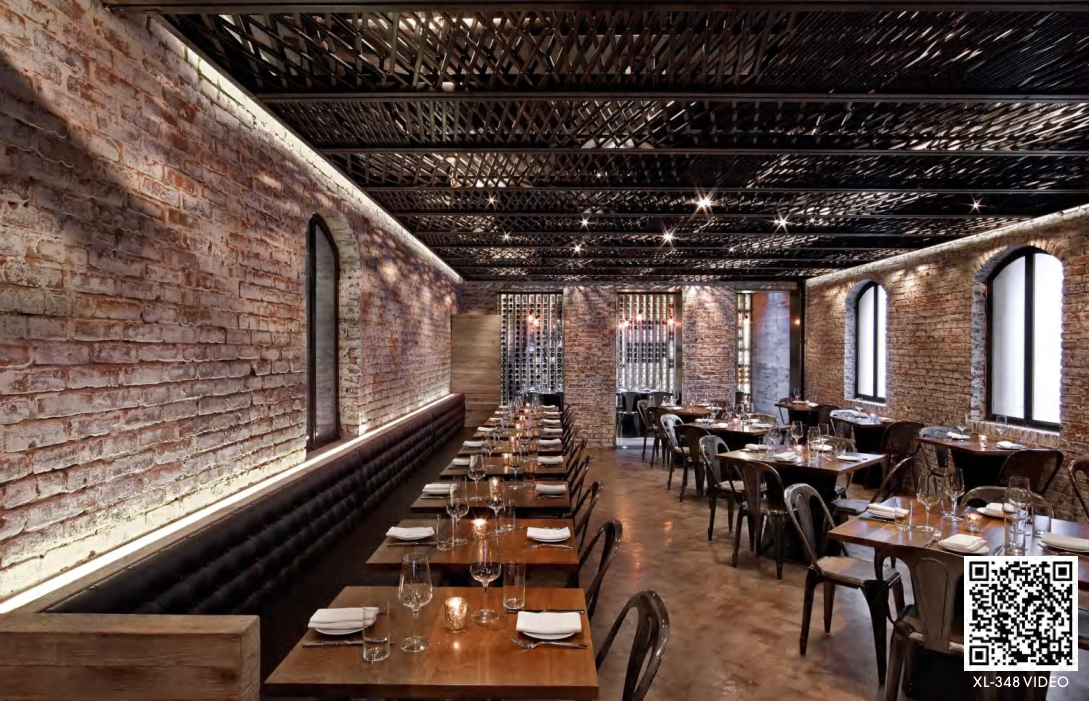
- Hidden source — The light reads as part of the building.
- Early planning — Must be coordinated before panels are cut.
- Flush finish — The diffuser sits level with the panel.
What decides it
- Panel material — Thin boards favour surface fixing.
- Clearance — Check the depth behind the channel.
- Servicing — A surface channel is easier to replace.
- Labour — Surface fixing needs no routing.
- Settings — Kitchens and retail favour surface; coves favour recessed.
Use the decision table below, then open the full collection for every printed cross-section.
What the drawings show

Printed profile dimensions for checking clearance and diffuser position.
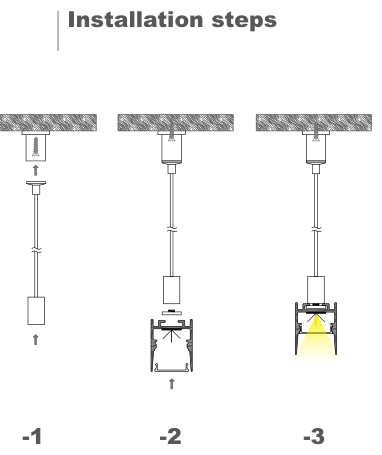
The three-step fixing sequence as printed in the catalogue.

End caps and fixings on pages that print an accessories block.
At a glance
| Selection factor | What this page covers |
|---|---|
| Profiles on this page | 16 |
| Size classes | Medium size 13, Mini size 3 |
| Printed strip widths | 10 mm, 14 mm, 15 mm, 18 mm, 19 mm, 20 mm, 24 mm, 30 mm, 32 mm |
| Stock lengths | 3000 mm, 4000 mm |
Surface mounted examples (no groove required)
-

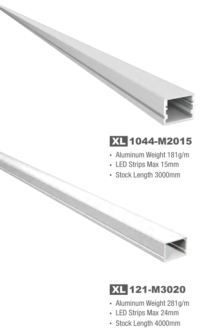
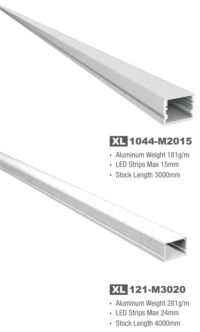
121-M3020 Surface Mounted LED Aluminum Profile
-
1044-M2015 Surface Mounted LED Aluminum Profile
-

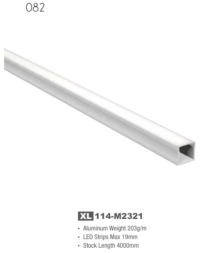
114-M2321 Surface Mounted LED Aluminum Profile
-

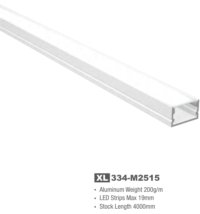
334-M2515 Surface Mounted LED Aluminum Profile
-

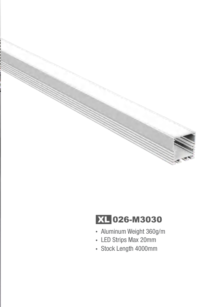
026-M3030 Surface Mounted LED Aluminum Profile
-

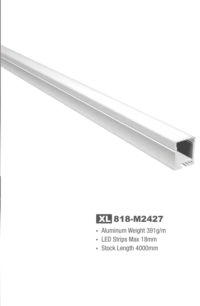
818-M2427 Surface Mounted LED Aluminum Profile
-

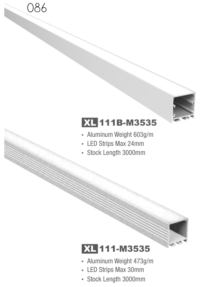
111-M3535 Surface Mounted LED Aluminum Profile
-

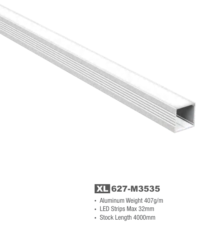
627-M3535 Surface Mounted LED Aluminum Profile
Recessed examples (groove required)
-

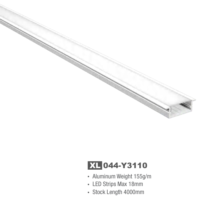
044-Y3110 Recessed LED Aluminum Profile
-

662-Y2112 Recessed LED Aluminum Profile
-

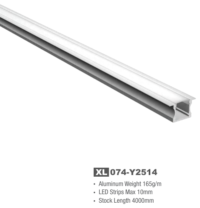
074-Y2514 Perfil de aluminio LED empotrado
-

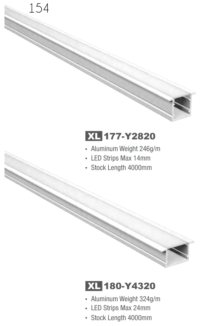
180-Y4320 Perfil de aluminio LED empotrado
-
177-Y2820 Perfil de aluminio LED empotrado
-

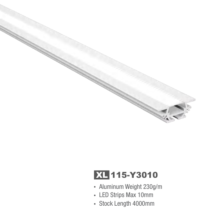
115-Y3010 Recessed LED Aluminum Profile
-

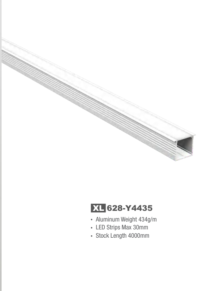
628-Y4435 Recessed LED Aluminum Profile
-

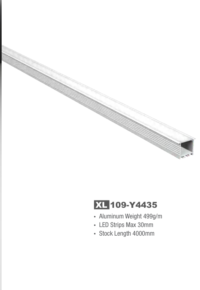
109-Y4435 Recessed LED Aluminum Profile