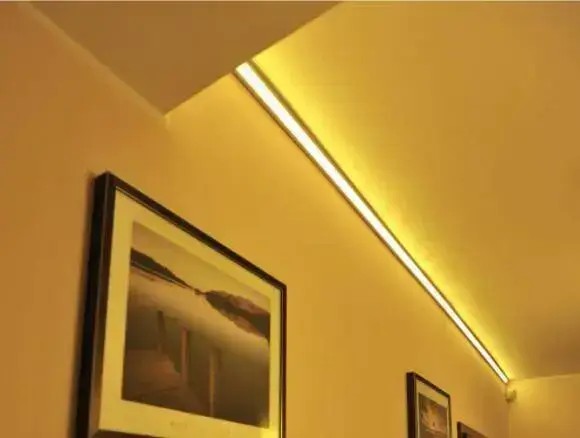
When an LED-Lichtleiste has to be installed along a corner — where two walls, a wall and a ceiling, or a cabinet edge meet — a standard flat channel simply does not fit. A corner LED channel is an angled aluminum profile designed to sit neatly in that 90° edge, holding the strip at a fixed angle and directing the light exactly where you want it.
It does three jobs at once: it protects the strip from dust and impact, it dissipates heat to keep brightness and lifespan high, and it turns a raw strip into a clean, professional-looking light line with no visible dots or glare.
This guide explains what a corner LED channel is, why it is worth using, which type fits which location, and how to choose the right one for your project — with our corner LED aluminum profile series as practical examples.
Artikelführer
What Is a Corner LED Channel?
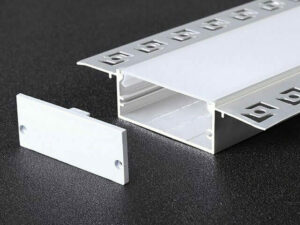
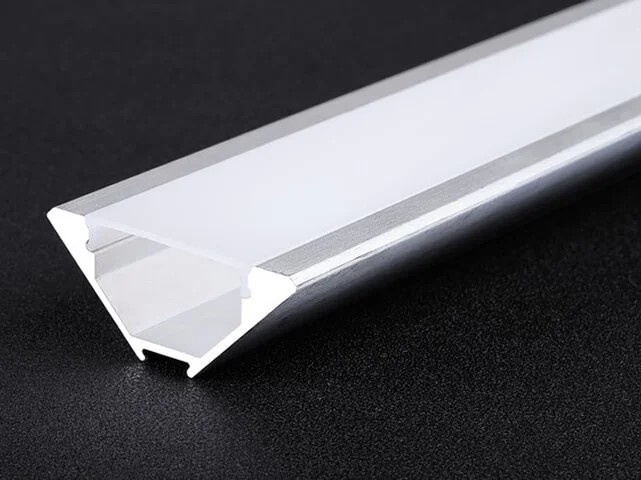
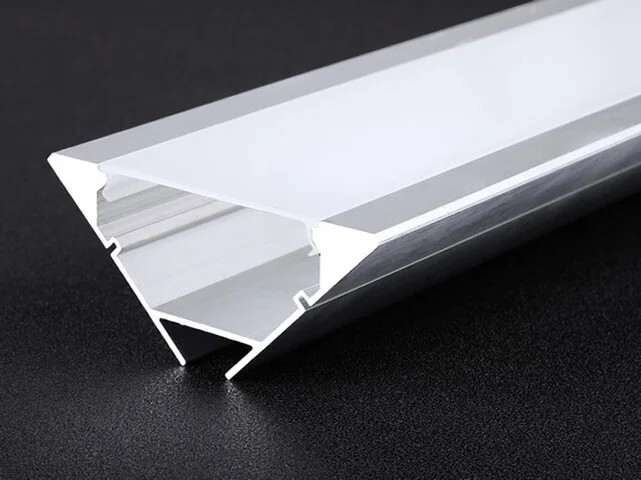
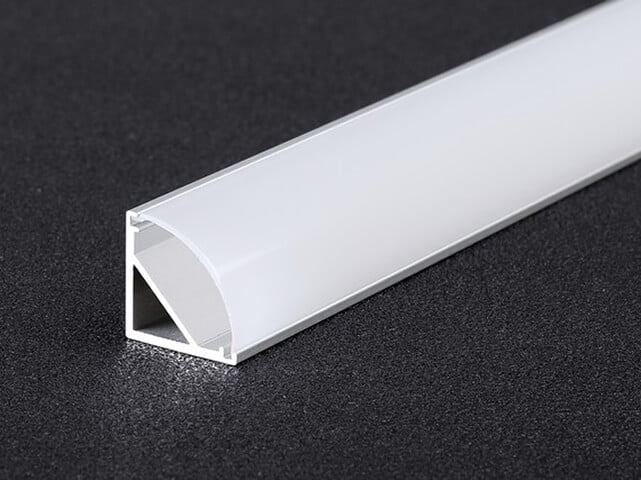
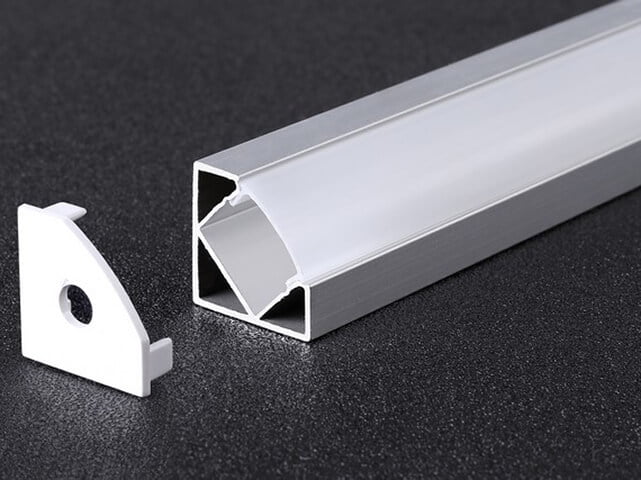
A corner LED channel — also called a corner LED profile or angled LED extrusion — is an aluminum housing with a built-in angle. It is extruded so that the light-emitting surface faces out at a set angle, usually 45°, which lets it sit across a 90° corner and spread light evenly onto two nearby surfaces.
A complete corner LED channel system is made of three parts:
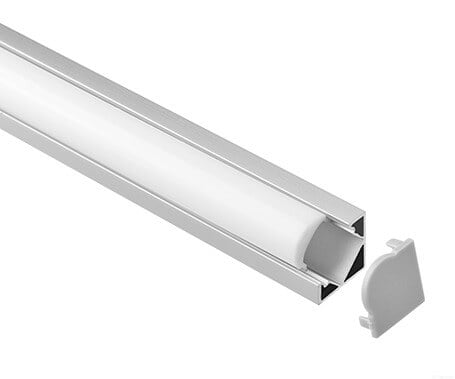
1. Aluminiumprofilkörper
Extruded from AL6063-T5 aluminum, it gives the strip a rigid, straight mounting surface, protects it from dust and physical damage, and works as a heat sink.
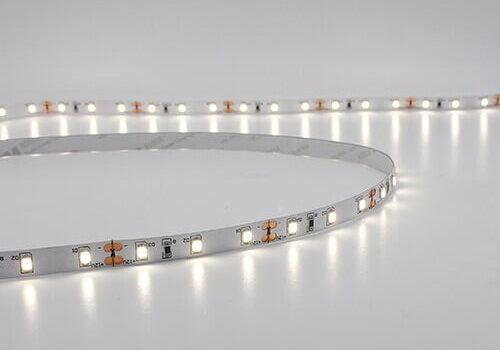
2. LED-Streifenlicht
A flexible LED strip (typically 8–12 mm wide) is fixed inside the channel on adhesive tape, ready to be connected to a suitable LED-Stromversorgung.
3. LED Diffuser Cover
A milky or frosted PC cover clips onto the profile to soften the light, remove the dotted look of individual LEDs, and protect the strip.
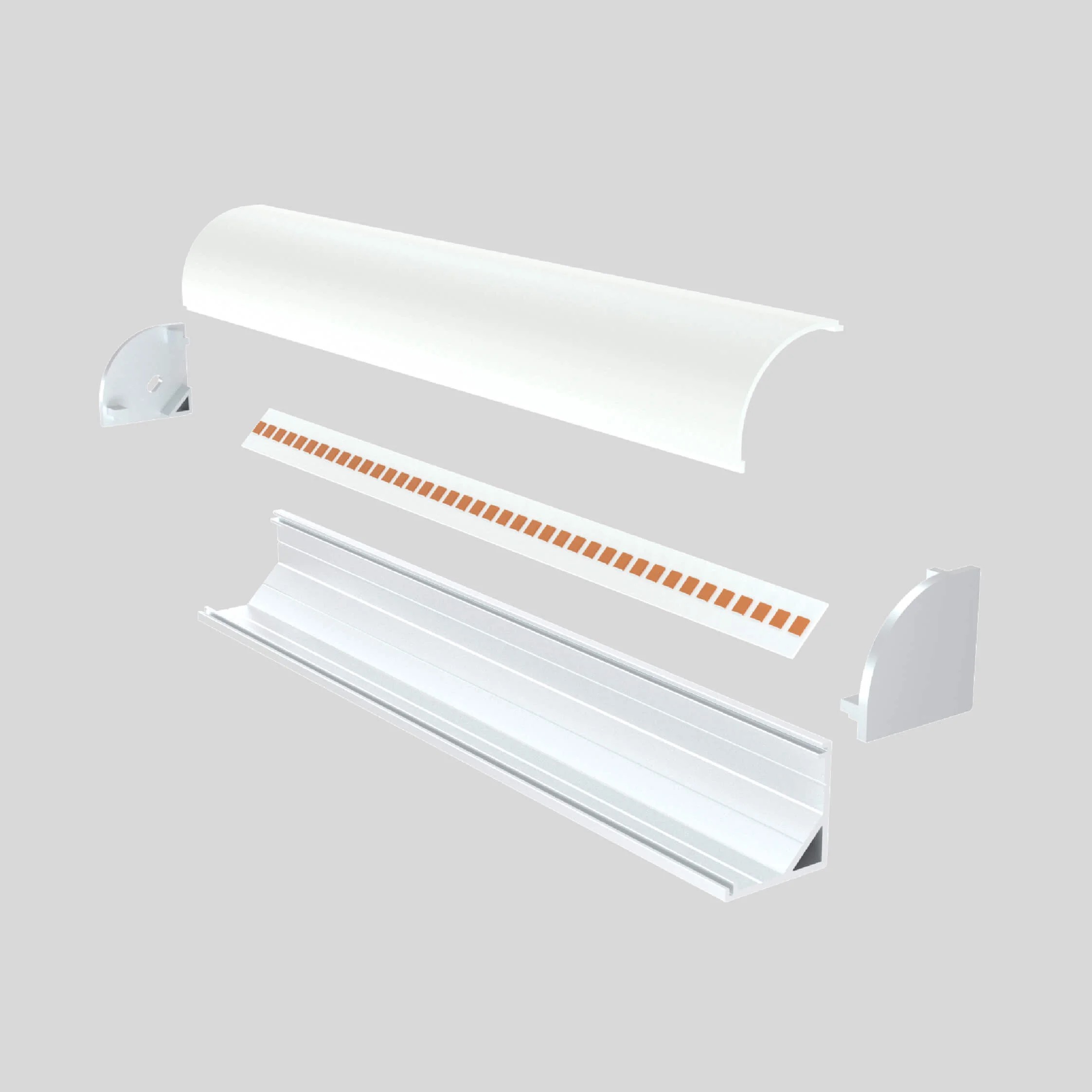
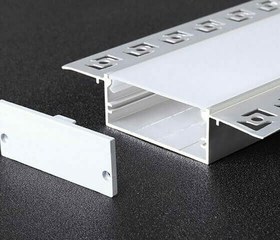
Corner channel structure: angled aluminum body + LED strip + diffuser cover
Why Use a Corner LED Channel?
✓ Better Lighting Angle
The fixed 45° angle aims light onto two surfaces at once, so a corner run lights both the wall and the ceiling — or the cabinet and the countertop — without dark edges.
✓ Professional Appearance
The channel hides the strip, the solder joints and the wiring, leaving a clean, continuous light line that looks factory-installed.
✓ LED Strip Protection
The aluminum body shields the strip from dust, moisture splash and accidental impact — important in kitchens, retail displays and high-traffic areas.
✓ Better Heat Management
Aluminum conducts heat away from the LED chips, keeping them cooler. Lower temperature means more stable brightness and a longer strip lifespan.
Allgemeine Anwendungen
Because a corner channel fits exactly where two surfaces meet, it is one of the most versatile LED profiles. Typical uses include:
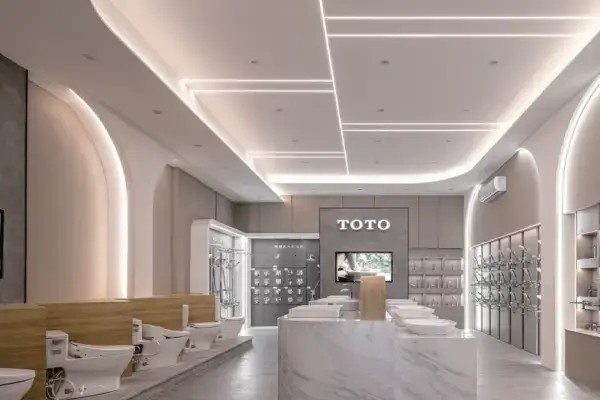
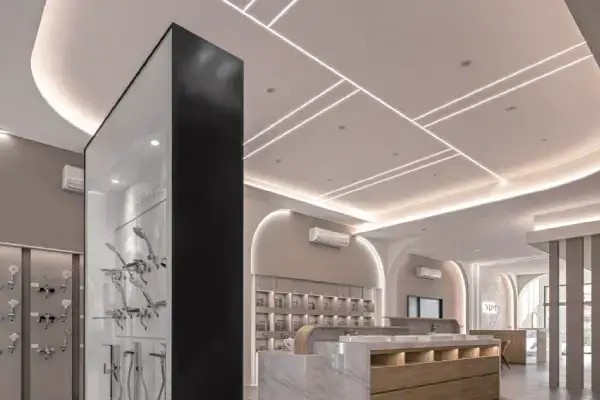
Corner channel lighting in real interior projects
For more ideas, see our LED aluminum profile applications collection.
Types of Corner LED Channels
How to Choose the Right Corner LED Channel
1. Check the Installation Location
Decide whether the profile will be surface-mounted or recessed, and confirm the corner angle (inside vs outside corners need different profiles).
2. Match the LED Strip Width
Check the internal width of the channel. Most Lightstec corner profiles accept 8–10 mm strips; wider strips need wider channels.
3. Consider Heat Dissipation
High-power strips generate more heat. Choose a profile with enough aluminum mass and a good thermal path to keep the strip cool.
4. Select the Right Diffuser
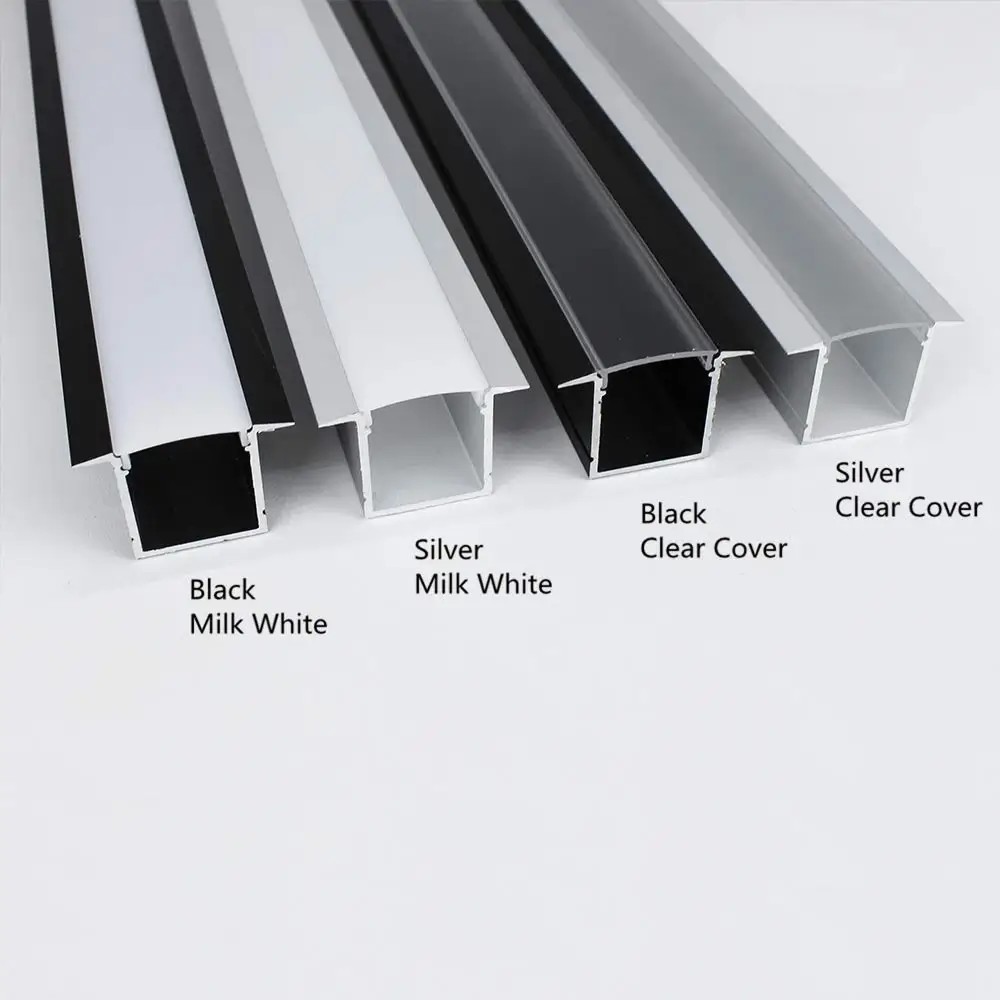
Use a milky (opal) diffuser for a soft, uniform glow without LED dots; transparent covers give maximum brightness with visible dots.
5. Consider Surface Finish
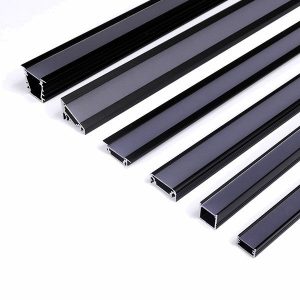
Silver anodized suits most interiors; black powder coating matches dark cabinetry and modern design styles.
6. Choose a Reliable Manufacturer
Check extrusion quality, consistent finish, and available accessories (end caps, clips, diffusers). A factory like Lightstec can also customize lengths.
Corner LED Channel vs Standard LED Profile
| Besonderheit | Corner LED Channel | Standard (Flat) Profile |
|---|---|---|
| Form | Angled (usually 45°) to fit corners | Flat or square, mounted on a straight surface |
| Lichtrichtung | Aimed at a set angle, lights two surfaces | Straight down or straight out |
| Am besten für | Corners, coves, cabinets, display edges | Ceilings, walls, under shelves, straight runs |
| Installation | Clips, screws or recessed into corner | Surface, recessed or pendant mounts |
| Visual effect | Light follows the architectural edge | Straight, continuous light line |
Lightstec Corner LED Channel Series
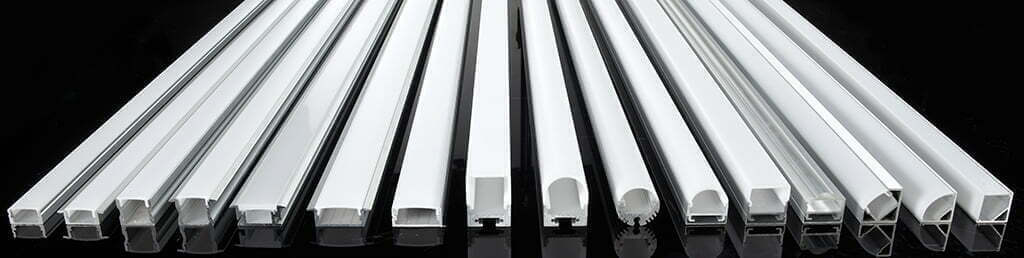
Als Profi Hersteller von LED-Aluminiumprofilen, Lightstec offers a complete range of corner channels in silver and black, with transparent, milky or frosted diffusers. All profiles are made of AL6063-T5 aluminum with anodized or painted surfaces and accept 8–10 mm LED strips. Click any product to see details and request a quote:
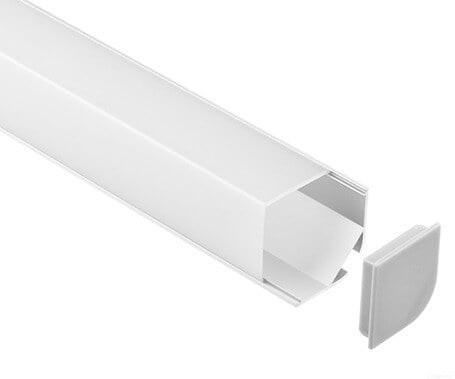
LT-2003
Classic corner channel with clips and end caps, easy retrofit.
Details anzeigen →
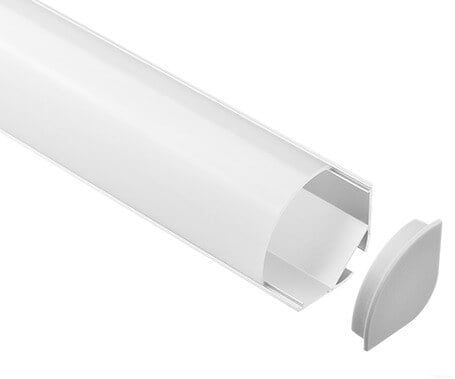
LT-2004
Angled profile designed for clean cove and cabinet lighting.
Details anzeigen →

LT-3030-R
Robust 30×30 style corner profile for stronger light output.
Details anzeigen →
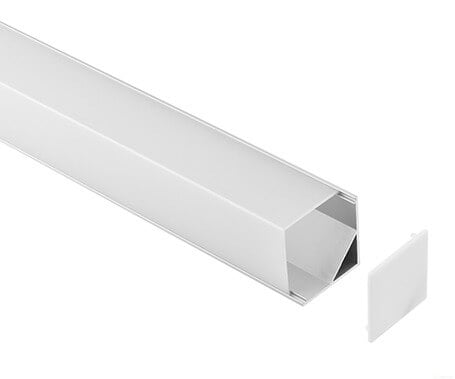
LT-3030-S
Surface-mounted corner profile with slim, modern look.
Details anzeigen →
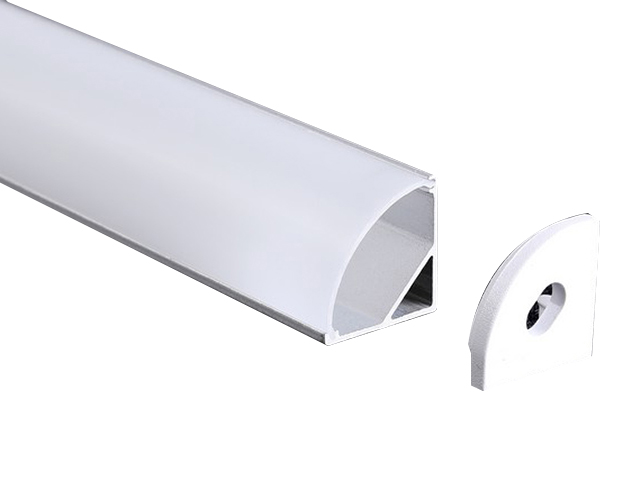
LT-601
Versatile corner extrusion for interior and commercial projects.
Details anzeigen →
Installationstipps
Corner profiles are easy to install. Follow these steps for a clean, long-lasting result:
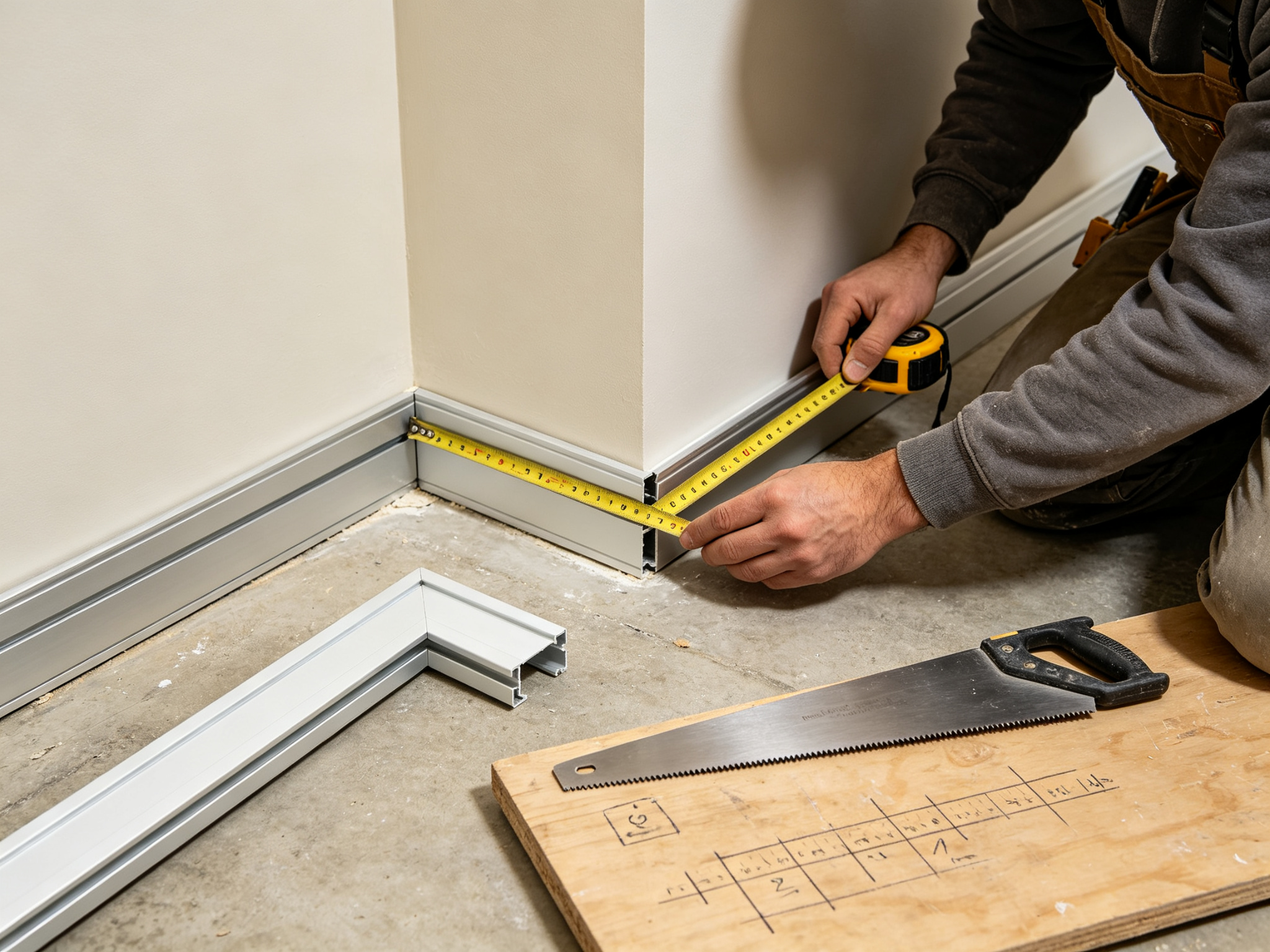
Step 1 – Measure and cut
Measure the corner run, mark the cutting line, and cut the profile with a fine-tooth saw. Deburr the cut edge with a file.
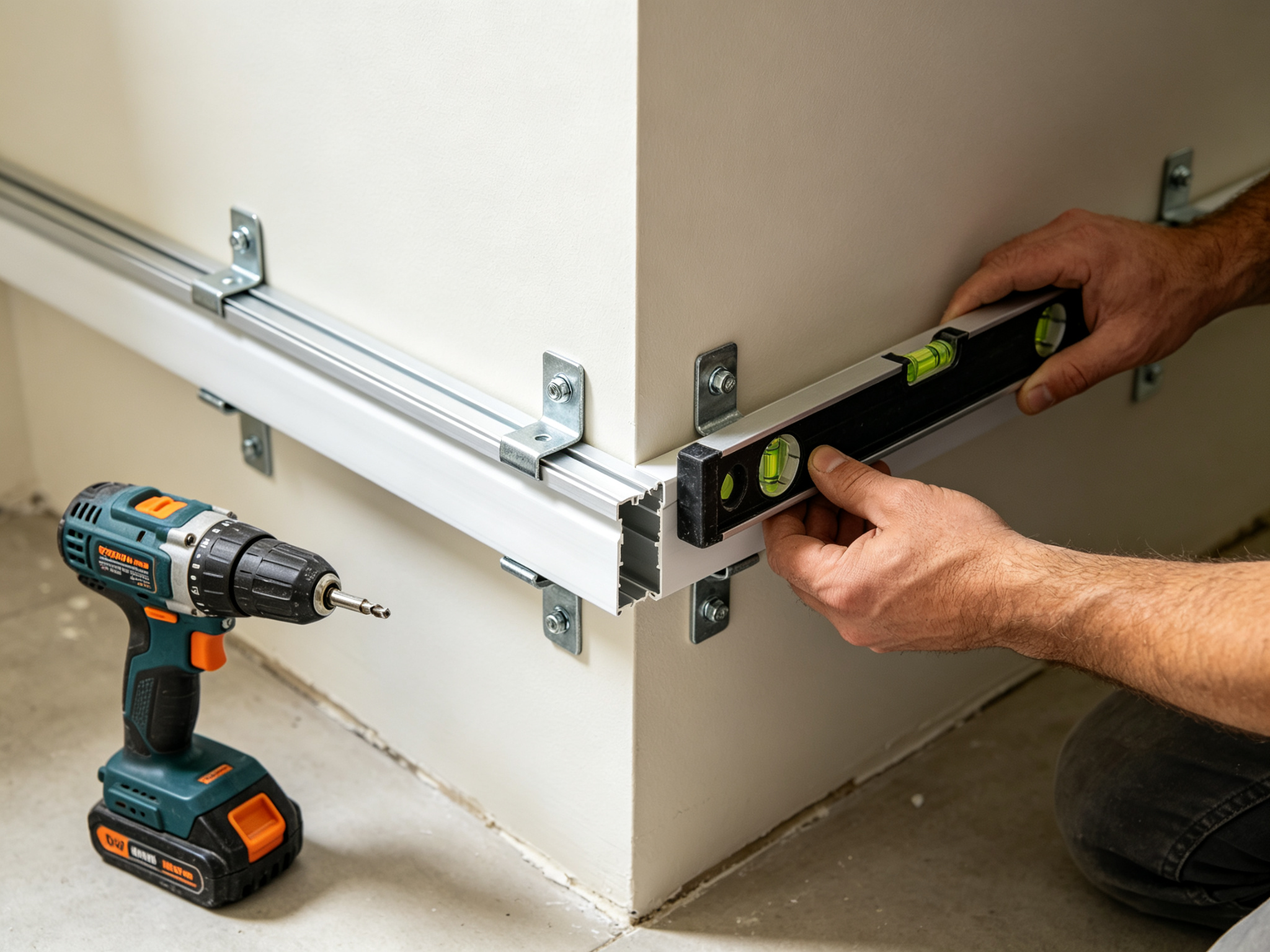
Step 2 – Fix the profile in place
Clean the corner surface, then fix the profile with mounting clips and screws, or strong adhesive tape. Keep the run level.
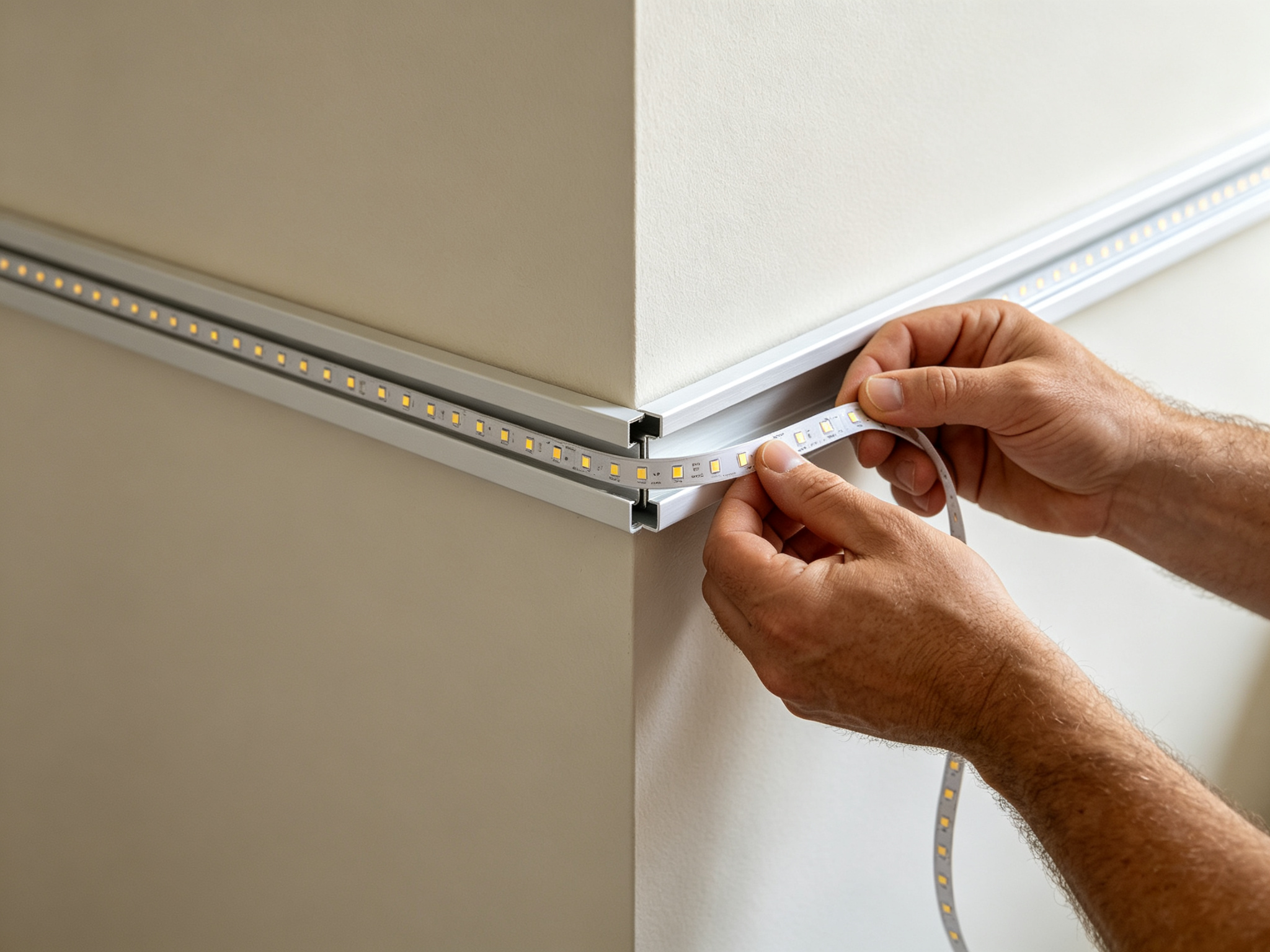
Step 3 – Install the LED strip
Cut the strip at the marked cut lines, remove the liner, and press it into the channel. Route the wires to the Stromversorgung.
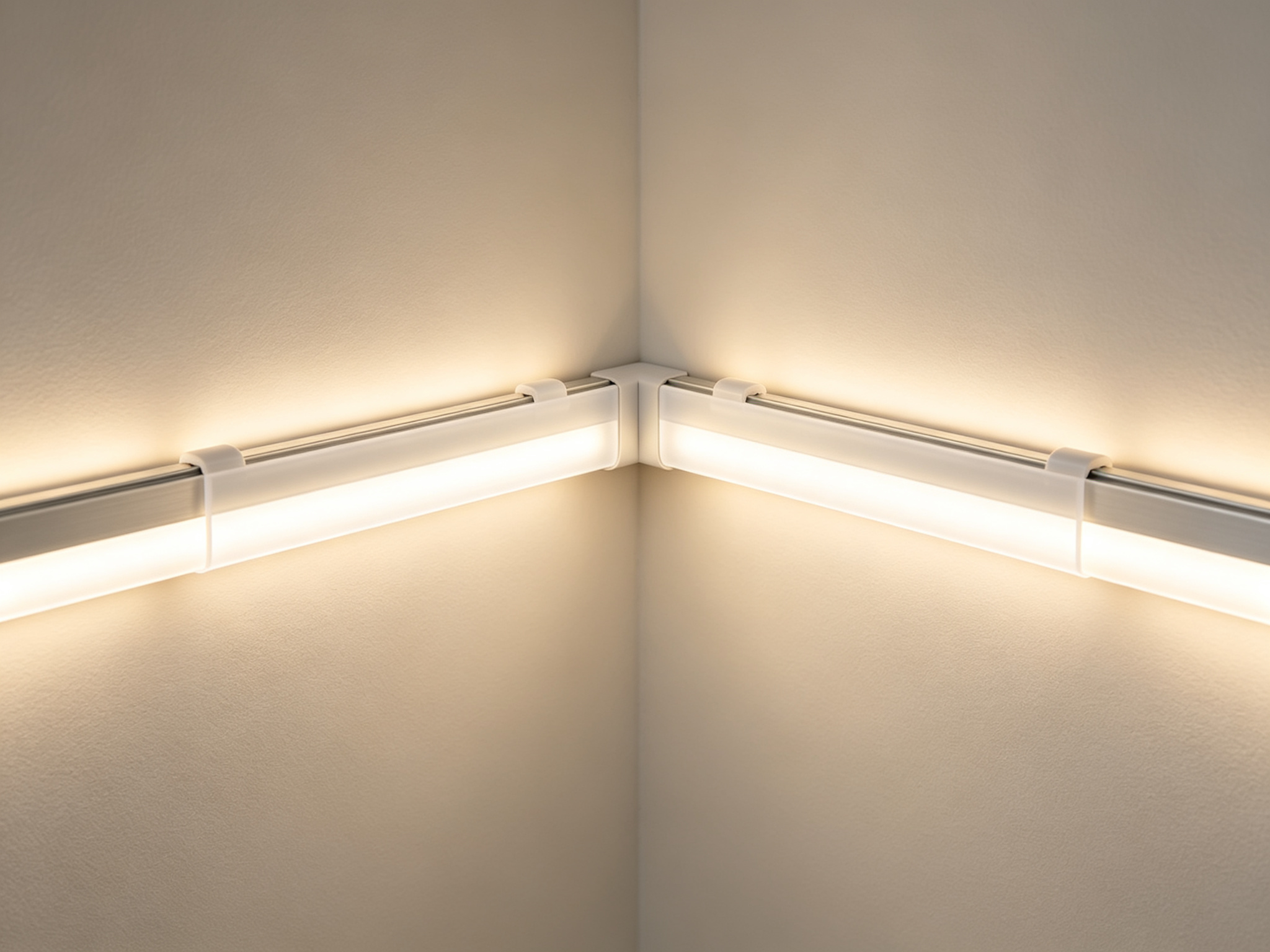
Step 4 – Clip on the diffuser
Snap the milky or frosted diffuser into the profile, fit the end caps, and connect the power to test the light.
For a detailed walk-through, read our So installieren Sie ein LED-Aluminiumprofil guide.
FAQ About Corner LED Channels
Q1. What angle does a corner LED channel use?
Most corner profiles are designed with a 45° light-facing angle so they can be mounted across a 90° corner and direct light onto two surfaces evenly. Other angles (30°, 60°) are available for special light-direction needs.
Q2. How wide can the LED strip be inside a corner channel?
It depends on the internal slot width. Lightstec corner profiles accept 8–10 mm strips, which covers most common SMD2835 and SMD5050 strips. Always check the channel width against your strip before ordering.
Q3. Can a corner profile be installed outside?
Standard anodized profiles are for indoor use. For outdoor corners you need a waterproof solution — either an IP65/IP68 waterproof LED strip with a sealed profile or a dedicated outdoor-rated channel.
Q4. Do I need end caps and clips?
Yes. End caps give the run a clean finish and protect the strip ends; mounting clips hold the profile securely and make the installation easier to level.
Q5. Can Lightstec customize the length?
Yes. Our factory can cut corner profiles to any length you need, and we support OEM/ODM projects. Contact our team with your requirements for a quote.
Q6. Why does my LED strip show dots even inside a channel?
If the strip has low LED density (e.g. 30 or 60 LEDs/m) and you use a transparent diffuser, individual dots remain visible. Switch to a milky (opal) diffuser, or choose a higher-density strip such as 120/144 LEDs/m for a perfectly smooth line.
Need Corner LED Channels for Your Project?
As a factory-direct LED aluminum profile manufacturer, Lightstec offers competitive prices, custom lengths and fast delivery. Tell us your requirements and get a quote today.

Jerry Wang — Lightstec Lighting Engineer
Jerry leads the Lightstec R&D and sales team, helping architects, distributors and contractors choose the right LED strip and aluminum profile solutions. He has helped 1,000+ projects worldwide.
Erfahren Sie mehr über professionell geleitete Kurse, die Ihnen weniger Leute sagen, bevor Sie einen Fehler machen.